
Shock Rebellion: Indiana Senate Rejects Trump’s Redistricting Plan
Shock Rebellion: Indiana Senate Rejects Trump’s Redistricting Plan
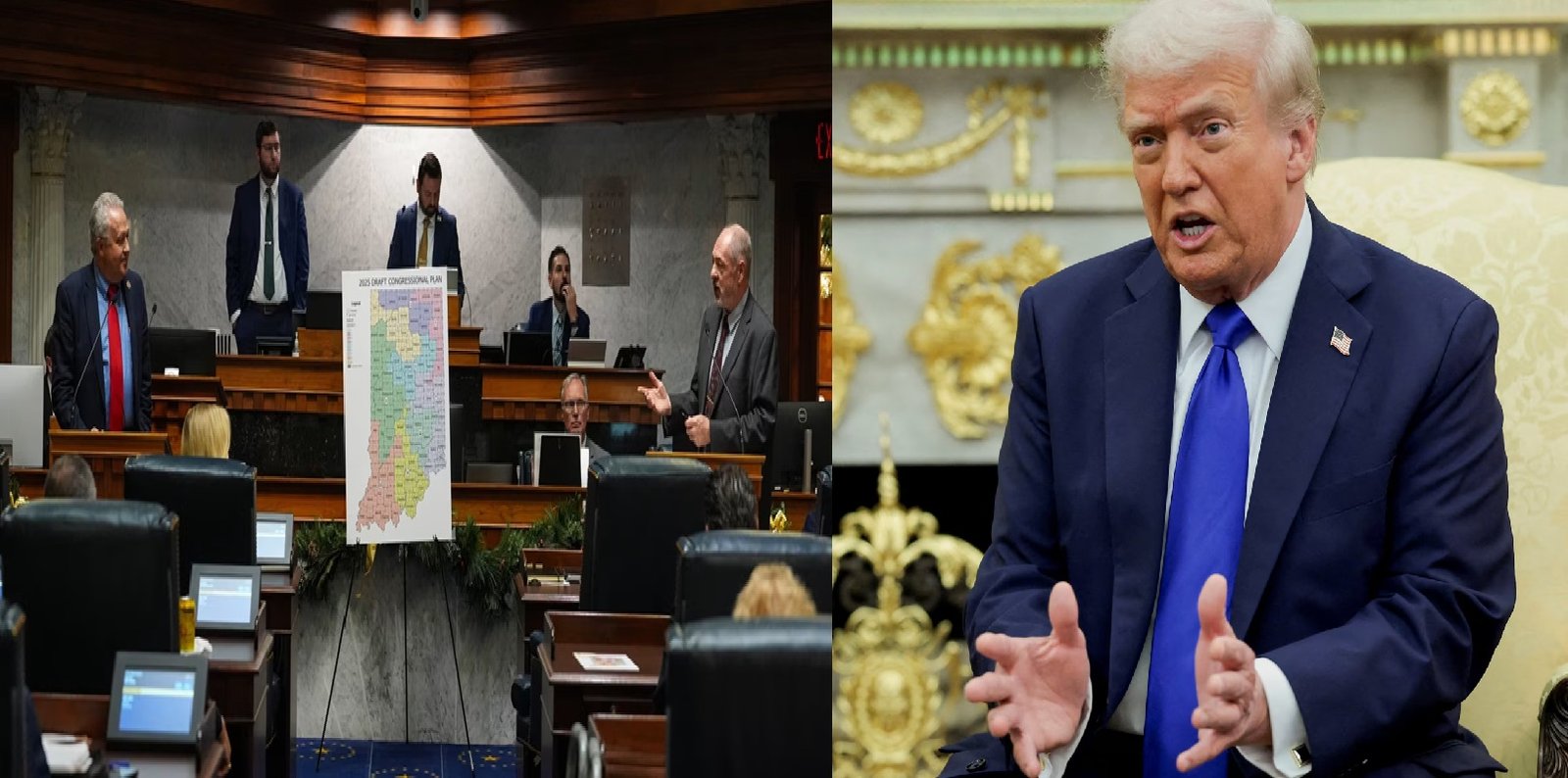
Shock Rebellion: Indiana’s GOP-led Senate blocks Trump-supported redistricting bill, triggering a national political storm and exposing deep rifts inside the Republican Party.
Indiana Senate Stuns Nation by Rejecting Trump-Backed Redistricting Plan: GOP Civil War Intensifies
Political shockwaves rippled across the United States on Thursday after Indiana’s GOP-led Senate unexpectedly voted down a redistricting proposal backed directly by former President Donald Trump. What was widely seen as a routine approval turned into a dramatic political rebellion, exposing the widening fractures inside the Republican Party. With the United States heading toward another highly charged election cycle, Indiana has now become the epicenter of the GOP’s growing internal struggle.
The bill was designed to redraw congressional maps in favor of enhancing Republican performance in key districts ahead of the 2026 elections. Analysts had anticipated a smooth passage, especially because of Trump’s influence among the state’s conservative base. However, several Republican lawmakers broke ranks, voting against the proposal and instantly triggering a national political storm.
https://digitalamitkaul.online/trump-remarks-ukraine-controversy-december-2025/
What political observers say
According to political observers, this rare act of intra-party defiance reflects a deepening ideological battle between traditional conservatives and the rapidly expanding pro-Trump faction. The establishment wing of the party has long expressed discomfort with aggressive map manipulation strategies, fearing legal blowback and public backlash. Meanwhile, Trump loyalists argued that strict redistricting was crucial to counter what they describe as “Democratic overreach” in other states.
The rejected bill has now opened an intense debate within the GOP machinery. Many loyal to Trump have condemned the lawmakers who voted against the proposal, calling the move “a betrayal of the America First movement.” Social media platforms saw immediate flurries of criticism from Trump supporters, some accusing Indiana Republicans of abandoning the former president’s vision for a stronger conservative majority in Congress.
Moderate Republicans, however, defended the vote, arguing that the bill risked substantial legal challenges. Several lawmakers privately expressed fears that approving an overly aggressive map could invite federal lawsuits under the Voting Rights Act, potentially putting the state in long-term legal jeopardy. They claim that the party is better served by stable, defensible maps rather than politically risky gerrymanders that could energize Democratic opposition.
Political experts say this episode symbolizes the GOP’s broader dilemma: embrace Trump fully, or attempt to rebuild a more traditional, institution-driven conservative identity. The battle for the party’s soul—already visible across national primaries, congressional leadership fights, and statewide elections—has now erupted into full view in Indiana.
With the vote’s fallout spreading quickly, both Republicans and Democrats are preparing for a prolonged political, legal, and electoral clash. The decision leaves Indiana without a new redistricting framework, meaning the existing map may need to be used unless lawmakers regroup and propose a compromise. For Democrats, the GOP’s internal chaos presents a rare political opportunity. Several Democratic strategists have already indicated plans to capitalize on Republican infighting during the next election cycle.
Shock Rebellion: Trump allies pressuring Indiana leadership
At the national level, Trump allies are pressuring Indiana leadership to reconsider the decision. Reports from within the party suggest that Trump’s team is furious, viewing the vote as a direct challenge to his influence. Some insiders claim that the former president may even endorse primary challengers against the Republican senators who voted “no,” escalating tensions even further.
The rejection of the redistricting plan also has significant implications for the 2026 congressional landscape. Indiana’s districts have traditionally leaned Republican, but shifting voter demographics mean that map changes could shape future victories or losses. Without a unified redistricting strategy, the GOP risks entering the next election cycle divided and less prepared.
As political analysts warn, the internal war within the Republican Party is no longer a quiet ideological disagreement—it is now a very public confrontation. And with Indiana at the center of this struggle, the state’s political developments are expected to influence national strategy, campaign messaging, and voter perception across the United States.
For now, one thing is clear: the battle over redistricting is far from over, and the Republican Party is heading into a turbulent phase that could redefine its future for years to come.
Pingback: PM Modi Begins Three-Country Diplomatic Tour to Strengthen India’s Global Partnerships - DNN
Pingback: Southeast Asia Developments: Military, Economy, and Political Shifts Redefine Regional Priorities - DNN