
Afghanistan Economy: How Taliban’s Afghanistan Survives After U.S. Exit
Afghanistan Economy: How Taliban’s Afghanistan Survives After U.S. Exit – GDP, Exports, and China’s Eye on Minerals
Afghanistan economy under Taliban rule struggles with poverty and limited GDP growth. Know how Afghanistan earns through agriculture, exports, and illegal trade, and why China is eyeing its rich mineral reserves.
Afghanistan’s Economy: From U.S. Withdrawal to Taliban Rule
Afghanistan, the same nation from which America was forced to withdraw in 2021, is once again in the spotlight. A 6.0 magnitude earthquake in Jalalabad recently caused massive devastation, killing more than 800 people and injuring over 3,000. This tragedy highlights the fragile infrastructure of a country already struggling under Taliban rule.
https://digitalamitkaul.online/iraq-pm-confirms-is-leader-abu-khadija-killed-in-security-operation/
According to Brown University’s Costs of War Project, the United States spent a staggering $2.26 trillion in Afghanistan between 2001 and 2021. But after the U.S. troop withdrawal, Afghanistan’s GDP growth sharply declined, and the Taliban took control of the economy.
Afghanistan Economy: What is Afghanistan’s GDP?
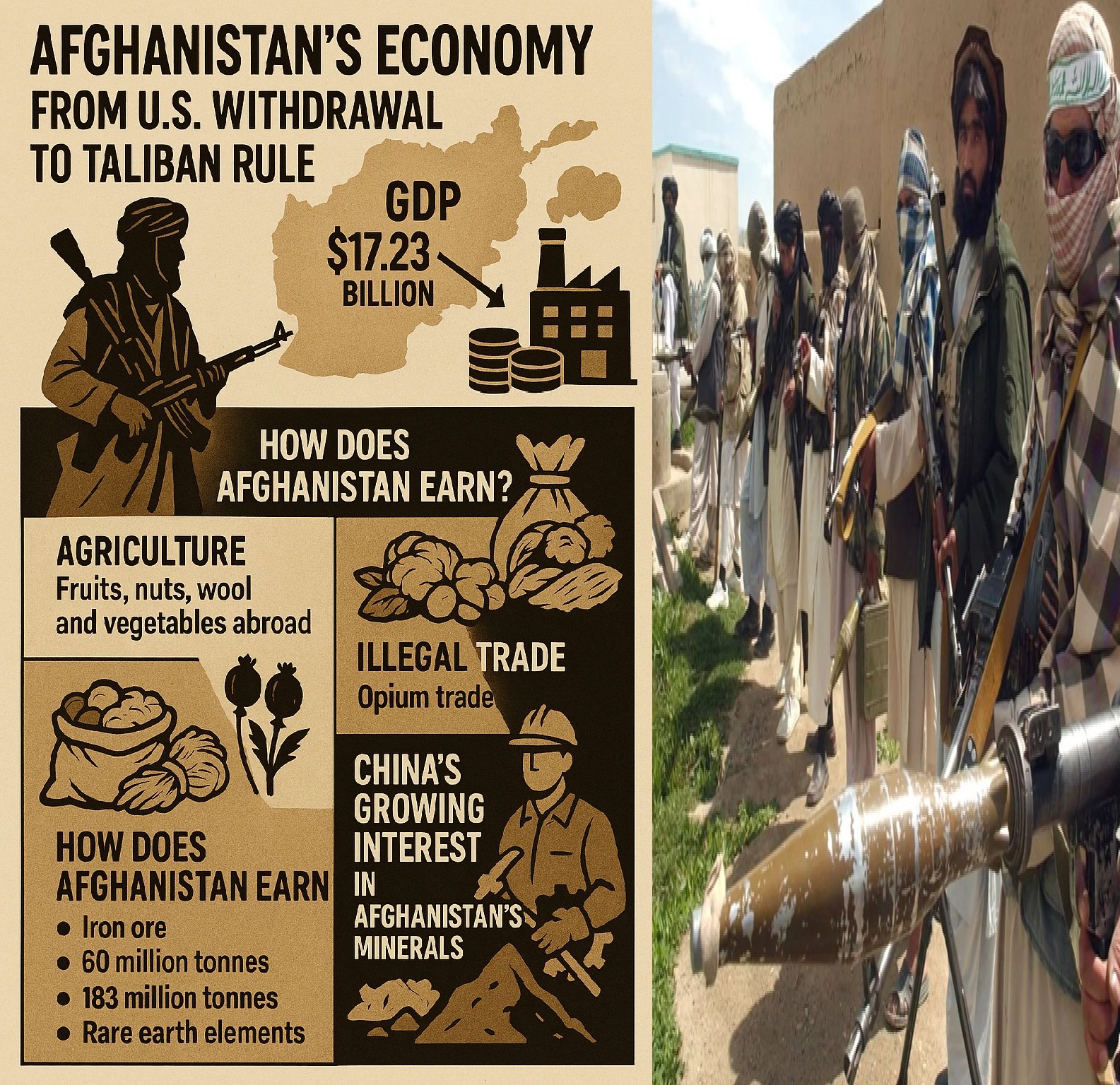
Based on World Economic Data 2023, Afghanistan’s GDP stands at $17.23 billion. Projections indicate it could reach $18.3 billion by 2025. The GDP growth rate in 2023 was 2.71%, while GDP per capita was only $380, reflecting widespread poverty.
Afghanistan Economy: How Does Afghanistan Earn?
Afghanistan’s economy is sustained by three major sectors:
Agriculture – Fruits, nuts, wool, and vegetables are exported abroad.
Service sector
Transport & trade
However, under Taliban rule, illegal sources of income also play a role, particularly the opium trade, which continues to finance certain groups.
According to the UN COMTRADE database (2019), Afghanistan’s total exports were $870.49 million, with India, Pakistan, and China as its main trading partners. Major exports include edible fruits, nuts, resins, citrus fruit peels, and vegetables. But the country faces a huge trade deficit of $7.70 billion.
China’s Growing Interest in Afghanistan’s Minerals
https://aamnewsnetwork.com/pakistan-airstrikes-in-afghanistan-kill-three-taliban-accuses-islamabad/
Afghanistan is sitting on vast untapped mineral wealth, including:
2.2 billion tonnes of iron ore
60 million tonnes of copper
183 million tonnes of aluminium
Rare earth elements like lanthanum, cerium, and neodymium
Lithium, critical for renewable energy and digital technology
China has already shown strong interest, signing multi-billion-dollar contracts for projects like the Mes Aynak copper mine, one of the largest copper deposits in the world. This mineral wealth could change Afghanistan’s economic future, but the question remains: Can Taliban rule turn resources into real development?