
Iranian Attacks on US Bases Caused Far More Destruction Than Reported: Satellite Imagery Raises Serious Questions
Iranian Attacks on US Bases Caused Far More Destruction Than Reported: Satellite Imagery Raises Serious Questions
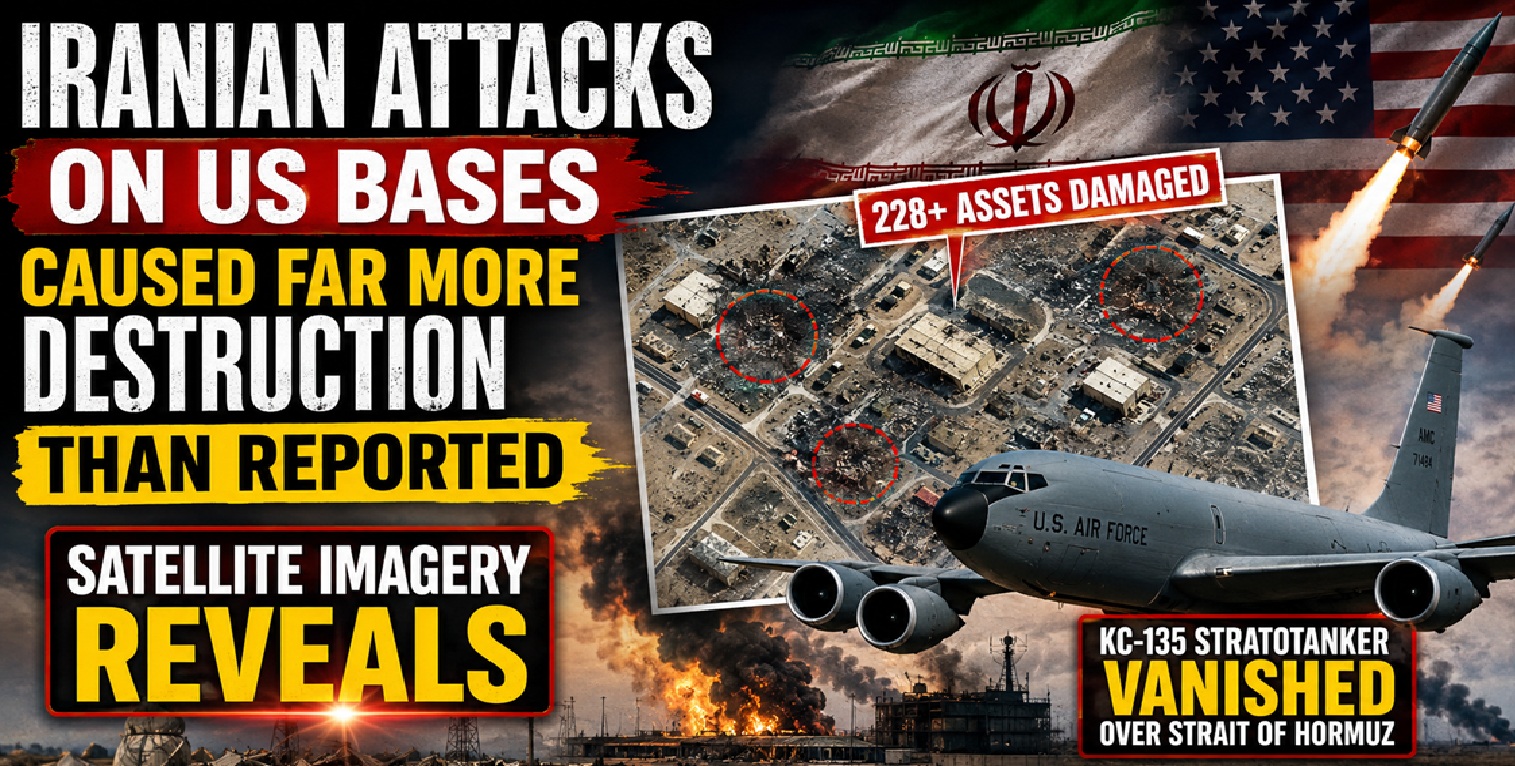
Iranian Attacks on US Bases: Satellite imagery analysis reportedly reveals that Iranian strikes on US military bases caused far greater destruction than initially disclosed. More than 228 US defense assets may have been damaged amid escalating Middle East tensions.
Iranian Attacks on US Bases: Iranian Strikes on US Military Bases May Have Been Underreported
Amit Kaul – For Digital Desk, Bengaluru: May 7, 2026 – A fresh analysis based on satellite imagery has intensified global attention on the growing confrontation between Iran and the United States in the Middle East. According to a Washington Post report,
Iranian missile and drone attacks on US military installations caused substantially more destruction than earlier assessments suggested.
The report claims that since February 28, at least 228 US military structures, defense systems, or equipment units have either been damaged or destroyed. The revelations have sparked renewed debate over the real scale of the conflict and whether Washington has deliberately minimized public disclosures regarding battlefield losses.
The findings arrive at a sensitive geopolitical moment, as tensions across the Gulf region continue to rise amid military posturing, maritime threats, and fears of a broader regional war.
https://digitalamitkaul.online/iran-hoot-torpedo-supercavitation-us-navy-threat-analysis/
Satellite Imagery Reveals Extensive Military Damage
The analysis reportedly examined high-resolution satellite images from multiple strategic US military installations across the Middle East. The images allegedly show visible destruction to:
- Aircraft hangars
- Fuel storage depots
- Radar and surveillance systems
- Barracks and troop housing
- Air defense infrastructure
- Communication facilities
- Aircraft parking zones
Defense experts reviewing the imagery suggest the scale of the damage indicates a highly coordinated Iranian campaign aimed at weakening US operational capabilities in the region rather than merely sending a symbolic message.
One of the most concerning aspects of the report is the alleged damage to advanced radar and air-defense systems. Such systems are considered essential for detecting incoming missiles and coordinating military responses. If severely degraded, it could temporarily reduce the effectiveness of US regional deterrence capabilities.
The report also points toward a broader shift in modern warfare, where satellite intelligence and open-source analysis are increasingly exposing realities that governments may choose not to immediately disclose.
Iranian Attacks on US Bases: Questions Over Lack of Official Transparency
Despite the seriousness of the reported destruction, US Central Command has not publicly released a comprehensive official assessment detailing the total damage to military assets.
This silence has fueled speculation among geopolitical analysts and defense observers. Some experts believe the Pentagon may be withholding detailed information to avoid projecting vulnerability during an already volatile regional crisis.
Historically, governments involved in active military confrontations often limit disclosure of operational losses to preserve strategic ambiguity and maintain troop morale. However, in the age of commercial satellite surveillance and independent intelligence analysis, controlling the narrative has become increasingly difficult.
Analysts warn that underreporting military damage could also complicate diplomatic efforts, particularly if adversaries perceive weakness or if allies begin questioning Washington’s ability to secure regional stability.
Iranian Attacks on US Bases: The Strategic Importance of the Middle East Bases
US military bases across the Gulf region play a critical role in monitoring shipping lanes, conducting counterterrorism operations, and deterring hostile actions from regional adversaries.
These installations are central to protecting energy trade routes, especially around the Strait of Hormuz — one of the world’s most strategically important maritime chokepoints. Nearly a fifth of global oil shipments pass through the narrow waterway, making any disruption a serious international concern.
Iran has repeatedly demonstrated its ability to threaten regional military and energy infrastructure through missile strikes, drone warfare, and proxy networks. The latest satellite imagery analysis appears to indicate that Tehran’s military capabilities remain highly sophisticated despite years of sanctions and international pressure.
Mystery Deepens After US KC-135 Aircraft Disappears
Adding another layer of intrigue to the escalating situation, reports emerged that a US Air Force KC-135 Stratotanker aircraft disappeared from radar while flying over the Strait of Hormuz.
The aircraft, valued between approximately $40 million and $52 million, is one of the US military’s most important aerial refueling platforms. These aircraft are essential for extending the operational range of fighter jets, bombers, and surveillance missions.
While no official confirmation has linked the aircraft’s disappearance to hostile action, the timing has triggered intense speculation across defense circles and international media.
Military aviation experts note that aircraft can temporarily disappear from public radar systems for several reasons, including operational security measures, technical failures, or classified mission protocols. Nevertheless, the incident has further heightened uncertainty surrounding the security environment in the Gulf.
Iranian Attacks on US Bases: Rising Risk of a Wider Regional Conflict
The broader implications of these developments extend far beyond Iran and the United States. Gulf nations, Israel, and international energy markets are closely monitoring the situation for signs of further escalation.
Any sustained cycle of retaliation could destabilize the region, disrupt oil markets, and increase the risk of direct military confrontation involving multiple countries.
Global investors are already reacting cautiously, with energy prices remaining sensitive to geopolitical developments in the Strait of Hormuz. Security experts warn that even limited disruptions to maritime traffic could have immediate consequences for global inflation and energy supply chains.
At the same time, diplomatic channels remain fragile. While several international actors continue urging restraint, the combination of military strikes, damaged infrastructure, and growing mistrust raises concerns that miscalculation could rapidly spiral into a larger conflict.
Iranian Attacks on US Bases: Conclusion
The latest satellite imagery analysis has introduced serious new questions about the true scale of damage inflicted during Iranian strikes on US military installations. If the reported destruction of more than 228 military assets is accurate, it could represent one of the most significant undeclared escalations in recent Middle East tensions.
Combined with the mysterious disappearance of a high-value US military aircraft over the Strait of Hormuz, the developments underscore the increasingly dangerous and unpredictable security environment unfolding in the region.
https://aamnewsnetwork.com/us-iran-conflict-trump-khamenei-14-point-deal-analysis-2/
As governments remain cautious with official disclosures, satellite intelligence and independent investigations are likely to play an increasingly influential role in shaping global understanding of modern conflicts.
Author Bio
Amit Kaul is a professional content writer and digital news strategist based in Bengaluru (India). With over a decade of experience covering transportation, technology, and travel, Amit specializes in creating SEO-optimized, engaging news content for digital platforms. He focuses on in-depth reporting, trend analysis, and reader-friendly storytelling, ensuring articles reach a global audience effectively.



Pingback: Israel’s Secret Iraq Base Exposed? Wall Street Journal Report Reveals Covert Preparations Against Iran - ANN