
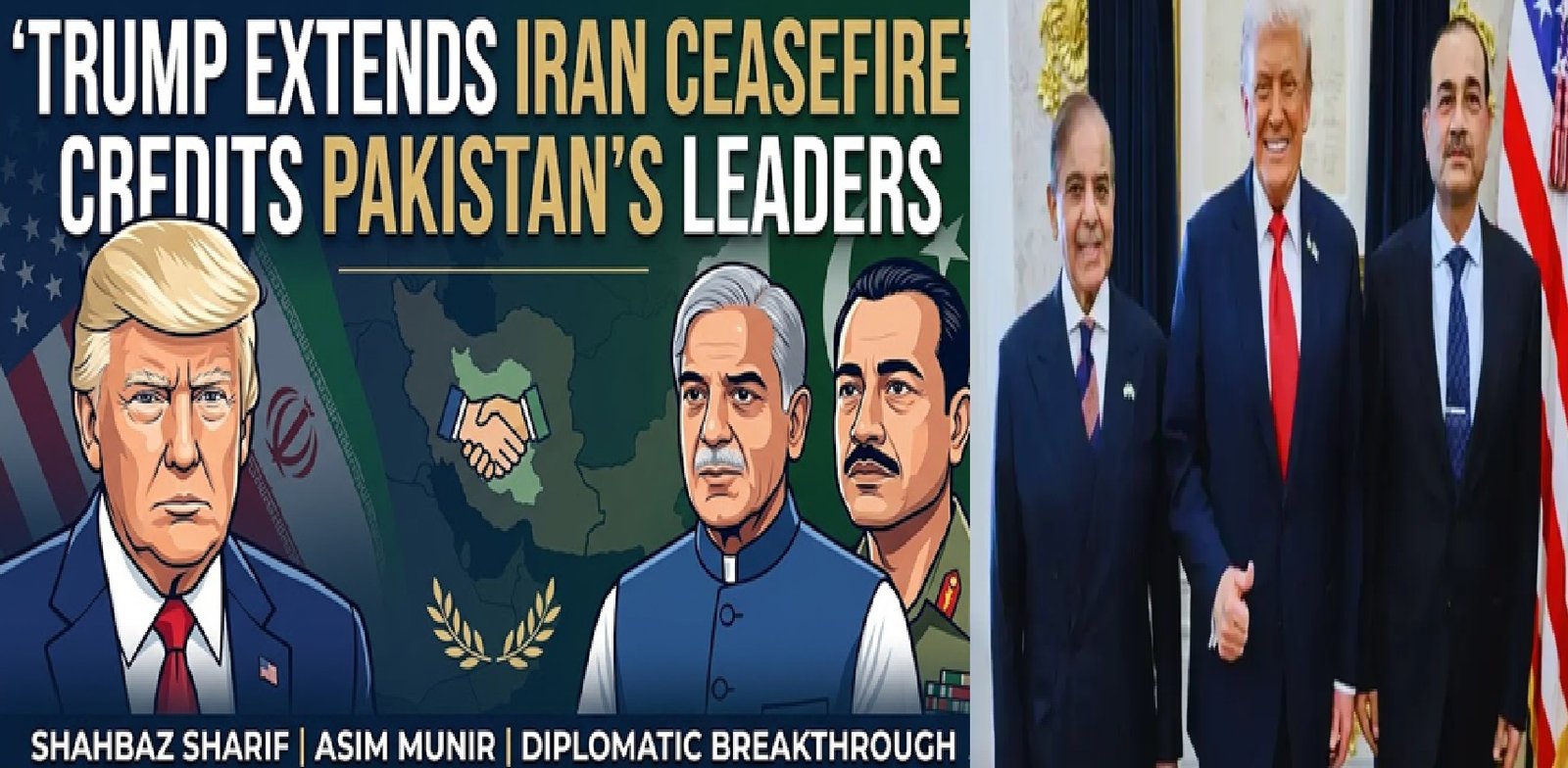
Trump Extends Iran Ceasefire, Credits Pakistan’s Shahbaz Sharif and Asim Munir for Diplomatic Breakthrough
Trump Extends Iran Ceasefire, Credits Pakistan’s Shahbaz Sharif and Asim Munir for Diplomatic Breakthrough
Trump Extends Iran Ceasefire: Donald Trump extends the US-Iran ceasefire and credits Pakistan’s leadership, Shahbaz Sharif and Asim Munir, for facilitating a crucial diplomatic pause. Full analysis inside.
Trump Extends Iran Ceasefire, Credits Pakistan for Crucial Diplomatic Intervention
Amit Kaul – For Digital Desk, Bengaluru: April 22, 2026 – In a significant geopolitical development, former U.S. President Donald Trump has announced an extension of the fragile ceasefire between the United States and Iran, just hours before its scheduled expiration. The move comes amid rising global tensions and uncertainty over the future of U.S.-Iran relations.
What makes this announcement particularly notable is Trump’s explicit acknowledgment of Pakistan’s role in facilitating the ceasefire. He credited Pakistani Prime Minister Shahbaz Sharif and Army Chief Asim Munir for their diplomatic efforts in halting potential escalation and creating space for negotiations.
https://digitalamitkaul.online/pakistan-blackouts-lng-crisis-hunger-iran-us-talks-plan/
A Strategic Pause Instead of Escalation
Speaking on Wednesday, Trump stated that the ceasefire would be extended indefinitely until Iran presents a concrete proposal for a long-term peace agreement. This marks a departure from previous U.S. strategies, where strict deadlines were often imposed on Tehran.
According to Trump, the decision to avoid setting a fixed timeline was deliberate. He emphasized the need to allow Iran’s leadership—often described as fragmented and internally divided—to reach a consensus before presenting a unified diplomatic stance.
This shift signals a more flexible approach, contrasting sharply with the hardline policies that have characterized much of the U.S.-Iran relationship in recent years.
Trump Extends Iran Ceasefire: Pakistan’s Emerging Role in Global Diplomacy
Trump’s acknowledgment of Pakistan’s involvement has placed Islamabad in the spotlight as a potential mediator in complex international conflicts. He stated that discussions with Shahbaz Sharif and Asim Munir were instrumental in shaping his decision to extend the ceasefire.
Pakistan has historically maintained relations with both Western powers and countries in the Middle East, positioning itself as a bridge in times of crisis. This development reinforces its evolving role as a diplomatic intermediary capable of influencing high-stakes negotiations.
Analysts suggest that Pakistan’s engagement may have helped de-escalate tensions at a critical juncture, preventing the situation from spiraling into a broader regional conflict.
Implications for U.S.-Iran Relations
The extension of the ceasefire introduces a new dynamic into the already complex relationship between Washington and Tehran. By removing immediate pressure, the U.S. appears to be testing whether diplomatic flexibility can yield more constructive outcomes.
For Iran, the extended timeline provides breathing room to navigate internal political divisions and craft a proposal that could potentially satisfy international expectations while preserving its strategic interests.
However, skepticism remains. Critics argue that without a clear deadline, negotiations could stall, allowing tensions to simmer rather than resolve.
Trump Extends Iran Ceasefire: Global Reactions and Strategic Calculations
The international community has reacted cautiously to the announcement. While some view the extension as a positive step toward de-escalation, others question whether it reflects a coherent long-term strategy.
Countries in the Middle East, particularly those directly affected by U.S.-Iran tensions, are closely monitoring developments. Any shift in the balance of power or diplomatic alignment could have far-reaching consequences for regional stability.
Meanwhile, global powers are likely assessing Pakistan’s increasing diplomatic involvement, which could reshape alliances and influence future negotiations on other international issues.
A Calculated Gamble or Diplomatic Opportunity?
Trump’s decision to extend the ceasefire without a defined endpoint can be seen as both a risk and an opportunity. On one hand, it reduces immediate pressure and lowers the chances of conflict escalation. On the other hand, it introduces uncertainty about the timeline and outcome of negotiations.
By crediting Pakistan’s leadership, Trump has also signaled a willingness to engage with non-traditional mediators, potentially opening new channels for diplomacy.
https://aamnewsnetwork.com/shamim-maafi-arrested-us-iran-drone-weapons-smuggling/
Trump Extends Iran Ceasefire: What Comes Next?
The focus now shifts to Iran and its ability to present a credible and unified proposal for a lasting peace agreement. The success of this extended ceasefire will largely depend on how quickly and effectively Tehran responds.
For the United States, the challenge lies in balancing patience with strategic urgency. For Pakistan, this moment could mark the beginning of a more prominent role on the global diplomatic stage.
As the situation evolves, the world watches closely—aware that the decisions made in the coming days could shape the trajectory of international relations in the months ahead.
Author Bio
Amit Kaul is a professional content writer and digital news strategist based in Bengaluru (India). With over a decade of experience covering transportation, technology, and travel, Amit specializes in creating SEO-optimized, engaging news content for digital platforms. He focuses on in-depth reporting, trend analysis, and reader-friendly storytelling, ensuring articles reach a global audience effectively.



Pingback: Speedboats, Masks, and Rifles: Iran Intercepts India-Bound Ships in Strait of Hormuz — Shocking Video Surfaces - ANN