
Iran’s ‘Baby Bombshell’: Mini-Submarine Network in Strait of Hormuz Raises Global War Concerns
Iran’s ‘Baby Bombshell’: Mini-Submarine Network in Strait of Hormuz Raises Global War Concerns
Iran’s ‘Baby Bombshell’: As the U.S.-Israel–Iran conflict enters day 39, Iran’s deployment of stealth mini-submarines in the Strait of Hormuz signals a dangerous escalation, threatening global oil supply and maritime security.
Iran’s ‘Baby Bombshell’: Mini-Submarine Network Threatens to Redefine Naval Warfare
Amit Kaul – For Digital Desk, Bengaluru: April 7, 2026 – As the conflict between the U.S.-Israel alliance and Iran enters its 39th day, the intensity of military operations continues to escalate across the Middle East. What initially appeared to be a series of calculated strikes has now evolved into a broader regional confrontation, with both sides demonstrating advanced capabilities and strategic depth. At the heart of this unfolding crisis lies one of the world’s most critical maritime chokepoints—the Strait of Hormuz.
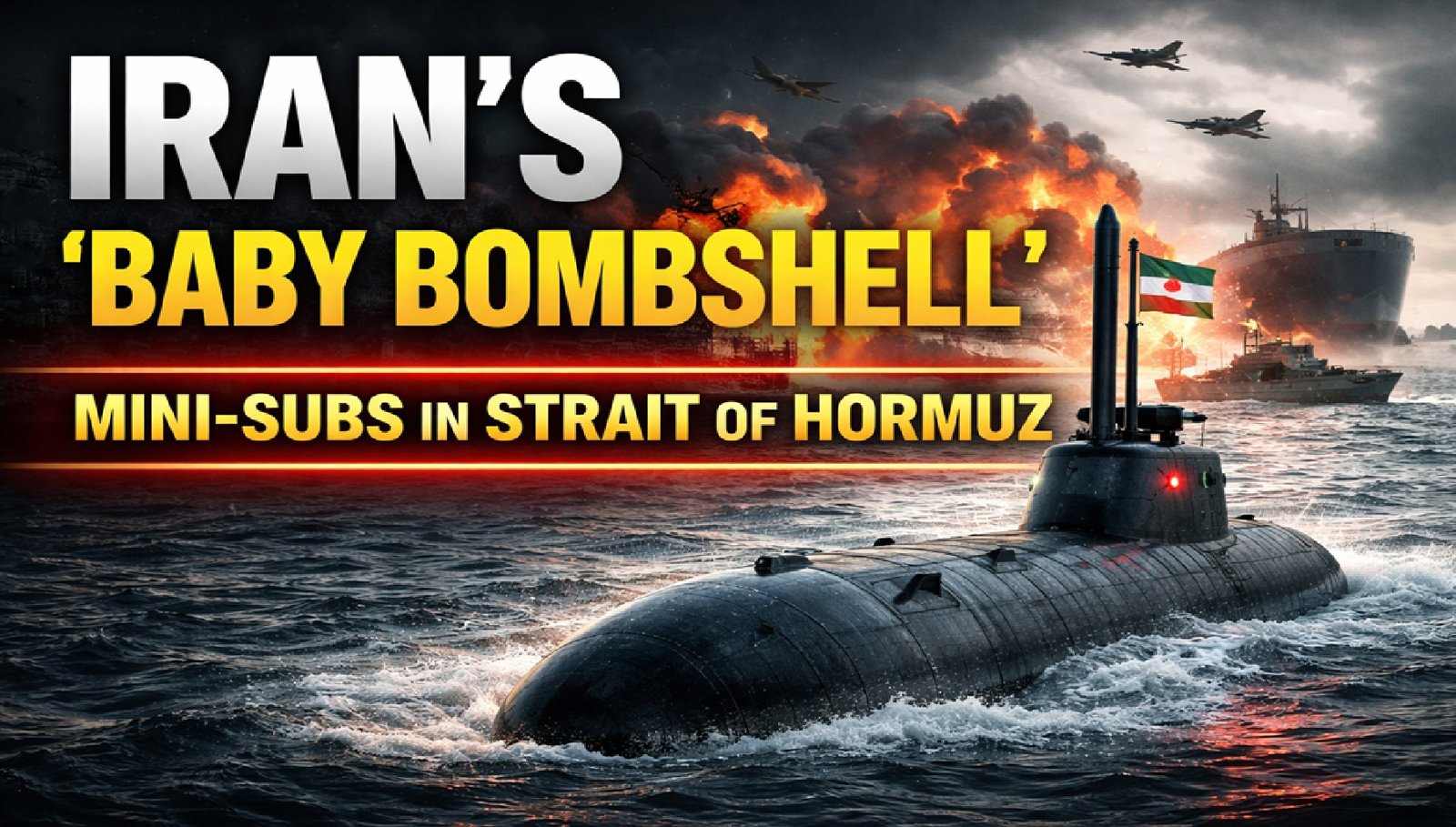
This narrow waterway, through which nearly 20% of global oil supply passes, has become the focal point of Iran’s asymmetric naval strategy. In what defense analysts are calling a “baby bombshell,” Iran has reportedly deployed a network of mini-submarines in the Strait—small, stealthy vessels capable of causing disproportionate disruption to naval forces and commercial shipping.
Iran’s ‘Baby Bombshell’: The Strait of Hormuz’s Strategic Significance
The Strait of Hormuz is not just a geographic feature; it is a global economic lifeline. Connecting the Persian Gulf to the Arabian Sea, it serves as the primary route for oil exports from major producers like Saudi Arabia, the UAE, Kuwait, and Iraq. Any disturbance in this area immediately affects the world’s energy markets.
Iran has long recognized the strategic leverage this chokepoint offers. In times of heightened tension, Tehran has repeatedly signaled its ability to disrupt maritime traffic. However, the current deployment of mini-submarines suggests a more sophisticated and potentially more dangerous approach.
https://digitalamitkaul.online/nuclear-disaster-warning-bushehr-strike-gulf-fears/
What Are Iran’s Mini-Submarines?
Often referred to as “midget submarines,” these vessels are significantly smaller than conventional submarines, making them harder to detect using traditional sonar systems. Iran is known to operate platforms such as the Ghadir-class mini-submarines, which are specifically designed for operations in shallow and confined waters like the Strait of Hormuz.
These submarines are believed to be equipped with torpedoes, naval mines, and possibly anti-ship missiles. Their small size allows them to maneuver easily, remain hidden for extended periods, and launch surprise attacks on both military and commercial vessels.
Defense experts warn that even a handful of such submarines, if used effectively, could create chaos in the Strait—targeting oil tankers, disrupting naval patrols, and forcing a shutdown of critical shipping lanes.
A Shift Toward Asymmetric Warfare
Iran’s reliance on mini-submarines reflects a broader military doctrine centered on asymmetric warfare. Rather than matching the U.S. Navy ship-for-ship, Iran focuses on exploiting vulnerabilities using unconventional tactics.
This includes the use of fast attack boats, drone swarms, coastal missile batteries, and now, a dispersed underwater network of stealth submarines. The goal is not necessarily to achieve outright naval dominance, but to make any military engagement costly, unpredictable, and prolonged.
The phrase “war will not be easy” increasingly defines this strategy. By complicating the operational environment, Iran aims to deter large-scale intervention while maintaining the ability to retaliate effectively.
Iran’s ‘Baby Bombshell’: Escalation Across the Region
Simultaneously, the broader conflict continues to intensify. Joint operations by the United States and Israel have reportedly targeted key Iranian military infrastructure, including missile sites and command centers. In response, Iran has launched strikes on U.S. military bases across Gulf nations, raising fears of a wider regional war.
The involvement of multiple actors, including proxy groups, has further complicated the situation. Shipping companies are already rerouting vessels or increasing security measures, while insurance premiums for transit through the Strait have surged sharply.
Global Implications: Oil, Trade, and Security
The potential consequences of a disrupted Strait of Hormuz are immense. A sustained blockage or threat could trigger a sharp spike in global oil prices, disrupt supply chains, and destabilize financial markets.
Countries heavily dependent on Gulf oil exports may face immediate economic challenges, while import-dependent nations could see rising inflation and energy shortages. The situation also places immense pressure on international naval coalitions tasked with ensuring freedom of navigation.
What Comes Next?
The deployment of mini-submarines marks a critical turning point in the ongoing conflict. It signals Iran’s readiness to escalate in ways that are difficult to counter using conventional military tactics.
For the United States and its allies, the challenge now lies in maintaining maritime security without triggering a full-scale war. Advanced anti-submarine warfare systems, increased surveillance, and coordinated naval patrols are likely to become central to their strategy.
However, the risk of miscalculation remains high. In such a volatile environment, even a single incident—such as the sinking of a commercial vessel—could rapidly spiral into a broader confrontation.
Iran’s ‘Baby Bombshell’: Conclusion
Iran’s “baby bombshell” strategy underscores a fundamental shift in modern warfare, where smaller, stealthier, and more agile systems can have an outsized impact on global stability. As tensions continue to rise in the Strait of Hormuz, the world watches closely, aware that what happens in these narrow waters could shape the course of the global economy—and the future of international conflict.
https://aamnewsnetwork.com/iran-us-conflict-pilot-rescue-trump-statement-controversy/
The message from Tehran is clear: any war in the region will be complex, costly, and far from easy.
Author Bio
Amit Kaul is a professional content writer and digital news strategist based in Bengaluru (India). With over a decade of experience covering transportation, technology, and travel, Amit specializes in creating SEO-optimized, engaging news content for digital platforms. He focuses on in-depth reporting, trend analysis, and reader-friendly storytelling, ensuring articles reach a global audience effectively.