
India Blasts Pakistan at UN Security Council, Denounces Normalisation of Terrorism
India Blasts Pakistan at UN Security Council, Denounces Normalisation of Terrorism
India Blasts Pakistan at UN Security Council: At the United Nations Security Council, India strongly rejected Pakistan’s claims and condemned the use of terrorism as state policy, asserting that terrorism can never be normalised. Read how India countered false narratives and reiterated its commitment to peace and security on the global stage.
India Blasts Pakistan at UN Security Council, Denounces Normalisation of Terrorism
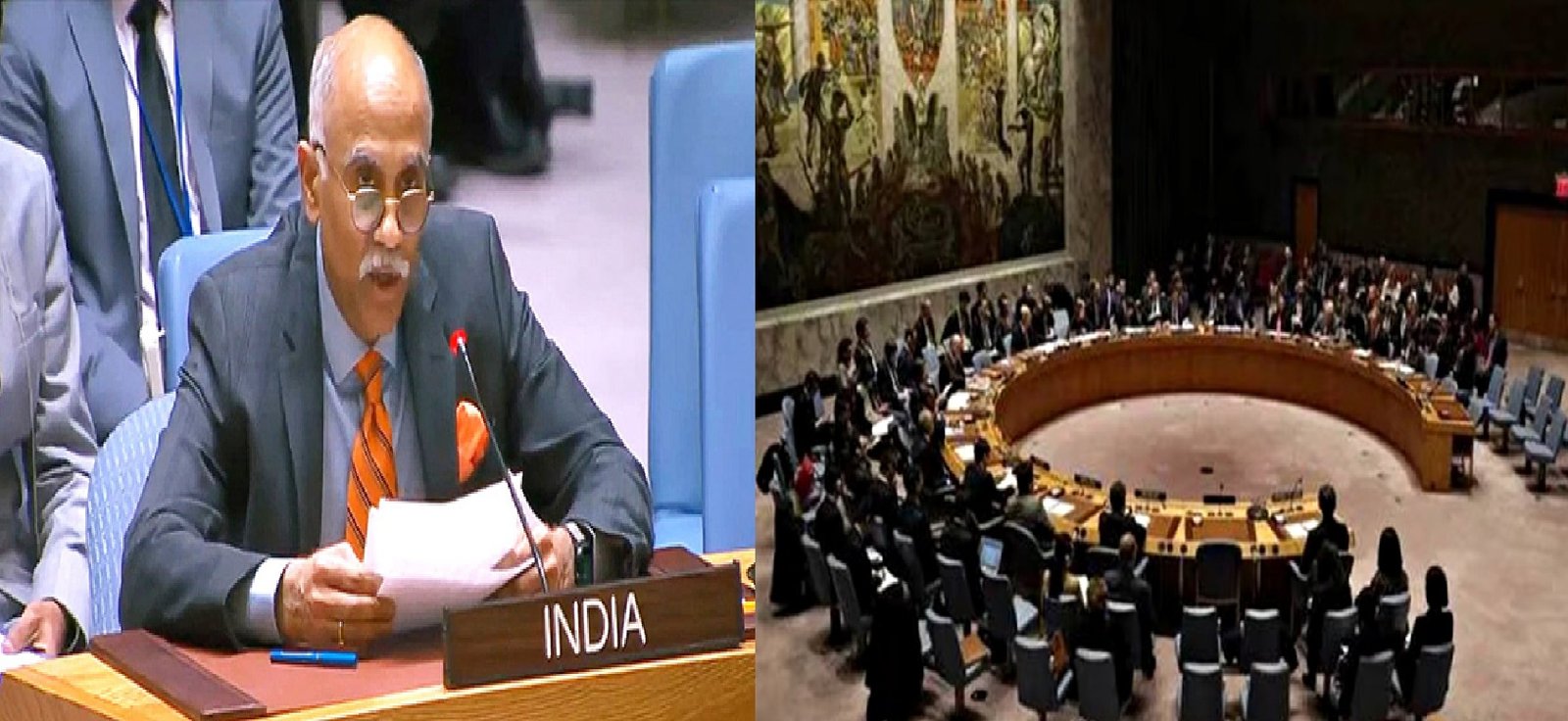
Amit Kaul – For Digital Desk, Bengaluru: January 27, 2026 – In a firm and forceful address at the United Nations Security Council (UNSC) on Tuesday, 27 January 2026, India’s Permanent Representative to the UN, Ambassador Parvathaneni Harish, took the floor to strongly rebuke Pakistan over its statements regarding terrorism and military operations. India’s response came during a high-profile open debate on reaffirming the international rule of law, peace, and multilateral cooperation, where tensions flared between New Delhi and Islamabad over Operation Sindoor and broader accusations relating to cross-border terrorism.
https://aamnewsnetwork.com/iran-fresh-protests-internet-restrictions-tighten/
Standing before the international body, Ambassador Harish directly addressed remarks by Pakistan’s representative, asserting that Islamabad’s approach reflects a “single-point agenda — to harm India and its people.” He dismissed Pakistan’s counter-narrative on Operation Sindoor as “false and self-serving,” labeling the claim as an attempt to misrepresent India’s actions and deflect from Pakistan’s own ties to terror networks.
Central to India’s address was the unequivocal message that terrorism can never be normalised — a direct rebuke to Pakistan’s suggestion that patterns of violence or coercion could become a new accepted reality in regional affairs. “It is not normal to tolerate Pakistan’s continued use of terrorism as an instrument of state policy,” Harish emphasized, underscoring that the Security Council’s platform must not be misused to legitimise or excuse terror activities.
India Blasts Pakistan at UN Security Council: Context and Key Contentions at the UNSC
The clash at the UNSC unfolded against the backdrop of longstanding tensions between India and Pakistan — particularly over issues of terrorism, border security, and competing narratives about military operations in disputed regions. During the debate, Pakistan’s envoy raised concerns about India’s previous actions, especially Operation Sindoor — a military campaign carried out in May 2025 targeting terrorist infrastructure in Pakistan-controlled areas. Islamabad claimed India’s operation was aggressive, coercive, and destabilising.
India’s response firmly countered those assertions, clarifying that Operation Sindoor was a measured, responsible operation aimed at dismantling terror networks — not an act of unprovoked aggression. Ambassador Harish reminded the council that Pakistan had itself acknowledged the impact of the operation, citing, for example, a ceasefire request from Pakistani forces during the conflict.
Further, New Delhi cited international responses to related terror attacks, referencing a UN Security Council press statement issued after the April 2025 Pahalgam attack, which condemned the killing of 26 civilians in Jammu and Kashmir and called for accountability for perpetrators, organisers, finance sources, and sponsors of terrorism. India argued its subsequent actions aligned with those calls for justice and the dismantling of terror infrastructure.
Diplomatic Implications and Broader Messages
While the primary focus was on countering Pakistan’s narrative, India’s address also carried broader implications for international diplomacy and the global fight against terrorism:
1. Reinforcing the International Rule of Law
By speaking out at the UNSC, India reiterated that international legal norms must be upheld, and that terrorism — regardless of motive or sponsor — cannot be rationalised as normal or acceptable. Harish stressed that platforms like the UN cannot be used to shift factual narratives or sidestep accountability for acts of terror.
2. Asserting Moral and Strategic Standpoints
India’s rebuttal was not merely a defence of specific military operations; it was also a strategic positioning of New Delhi as a nation committed to combating terror globally. New Delhi’s delegation argued that acceptable diplomatic engagement must prioritise peace, constructive dialogue, and multilateral cooperation — not attempts to deflect or distort facts.
3. Telling a Broader Narrative on Terrorism Sponsorship
India’s remarks brought renewed international focus to alleged cross-border terror sponsorship by Pakistan. Although Islamabad countered with its own narratives, India’s diplomatic efforts aimed to reinforce concerns voiced by global actors about the need for all states to fully dismantle terror infrastructure and halt support for extremist groups.
India Blasts Pakistan at UN Security Council: Reactions and Regional Impact
Diplomatic observers described the exchange as part of a larger pattern of rivalry between the two South Asian neighbours. India’s address at the UNSC, broadcast to an international audience, was seen as an attempt to shape global perspectives on terrorism, regional security, and Pakistan’s role in both.
Analysts noted that India’s emphasis on the non-normalisation of terrorism could resonate widely with nations facing similar threats, potentially prompting further multilateral focus on accountability and anti-terror cooperation. Meanwhile, Pakistan’s embassy in New York defended its earlier remarks, accusing India of violating international norms — a reflection of entrenched diplomatic positions that are unlikely to shift without substantive policy changes.
Conclusion: A Defining Moment in UN Diplomacy
India’s address at the United Nations Security Council on 27 January 2026 represents a significant moment in the ongoing diplomatic discourse around terrorism and regional stability. By confronting Pakistan’s narrative head-on and asserting that terrorism must never be normalised, India has positioned itself as a vocal advocate for peace, security, and factual transparency on the global stage.
https://digitalamitkaul.online/syria-moves-into-kurdish-territories-middle-east-conflict-2/
As the international community continues to navigate complex geopolitical challenges, the UNSC exchange underscores the enduring relevance of collective commitments to counterterrorism, uphold international law, and ensure that diplomatic platforms serve as arenas for constructive engagement — not propaganda or distortion.
Author Bio
Amit Kaul is a professional content writer and digital news strategist based in Bengaluru (India). With over a decade of experience covering transportation, technology, and travel, Amit specializes in creating SEO-optimized, engaging news content for digital platforms. He focuses on in-depth reporting, trend analysis, and reader-friendly storytelling, ensuring articles reach a global audience effectively.

Pingback: India Rebukes Pakistan at UN, Rejects False Operation Sindoor Narrative - DNN
Pingback: EU Labels Iran’s IRGC as Terrorist Organisation in Major Geopolitical Move - DNN
Pingback: US Deploys USS Abraham Lincoln Near Middle East Amid Rising Tensions - ANN