World on Edge: Iran War Triggers Oil Surge, Market Crash & Global Panic
World on Edge: Iran War Triggers Oil Surge, Market Crash & Global Panic
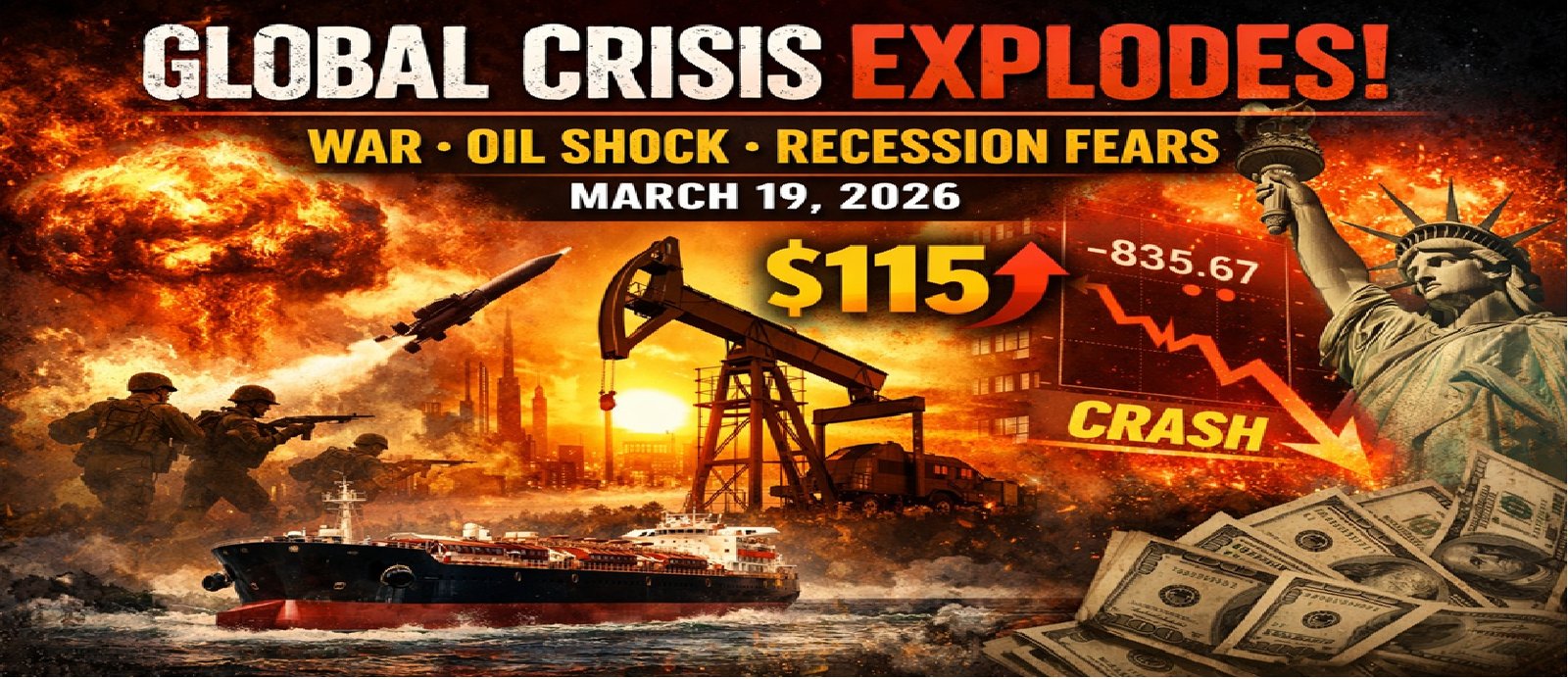
World on Edge: The world faces a massive crisis on March 19, 2026, as the Iran-Israel war triggers a global energy shock, oil prices surge above $115, markets fall, and recession fears grow. Get the latest updates on world politics, economy, and business in this detailed report.
Global Crisis Worsens: The World Is Shaken by War, Energy Shock, and Economic Uncertainty
Amit Kaul – For Digital Desk, Bengaluru: March 19, 2026 – The world stands at a critical crossroads on March 19, 2026, as geopolitical tensions, war-driven energy disruptions, and economic instability converge into what experts are calling the most significant global crisis in decades. From the Middle East conflict to Europe’s political divisions and a looming global recession, today’s developments are reshaping the future of international relations, business, and everyday life.
🔥 Middle East War Triggers Global Energy Shock
At the center of the crisis is the ongoing Iran-Israel war, which has rapidly escalated into a broader regional conflict. The war has already entered its third week, and its consequences are being felt worldwide.
Recent strikes on critical energy infrastructure—including gas fields and LNG facilities—have severely disrupted global supply chains. Iran’s attacks on key facilities in Qatar and other Gulf nations have forced shutdowns and triggered panic in energy markets.
https://aamnewsnetwork.com/us-strikes-iran-oil-hub-middle-east-war-2026/
Even more alarming is the disruption in the Strait of Hormuz, a vital global oil transit route responsible for nearly 20% of the world’s oil supply. Shipping traffic has nearly halted, with tanker movements dropping dramatically due to security risks.
As a result, oil prices have surged beyond $115–$118 per barrel, with analysts warning they could climb even higher if the conflict continues.
This marks one of the largest energy disruptions since the 1970s oil crisis, fundamentally altering global energy dynamics.
🌐 Global Economic Impact: Inflation, Markets & Recession Fears
The economic fallout from the conflict is spreading rapidly across continents. Rising fuel costs, disrupted trade routes, and supply shortages are driving inflation to dangerous levels.
Global stock markets have reacted sharply, with major indices falling amid uncertainty. Meanwhile, gas prices in Europe have doubled, and several Asian countries are facing fuel shortages and rationing.
Economists warn that if the conflict persists, the world could face a full-scale recession. Energy-dependent economies are particularly vulnerable, with industries struggling under rising costs and declining productivity.
The crisis is also impacting everyday life:
- Rising fuel prices are increasing transportation costs
- Higher electricity bills due to gas shortages
- Food supply disruptions due to shipping delays
In many regions, the economic burden is already being felt by ordinary citizens.
🏛️ Political Tensions Rise Across Europe
While the Middle East remains the epicenter of conflict, political instability is intensifying in Europe.
At the latest EU summit, leaders are divided over a €90 billion financial aid package for Ukraine, with Hungary blocking the deal over energy security concerns.
The dispute is closely tied to the Druzhba oil pipeline, a crucial supply route damaged during the ongoing Russia-Ukraine conflict. Hungary and Slovakia, heavily dependent on this pipeline, have taken a hard stance, even threatening to block further EU sanctions.
At the same time, European leaders are reluctant to join military operations in the Middle East, despite pressure from global allies. Instead, they are focusing on economic measures and energy security strategies.
This division highlights a growing challenge: balancing geopolitical commitments with domestic economic stability.
⚔️ Expanding Conflict Raises Global Security Concerns: World on Edge
The war is no longer confined to a single region. It is expanding, drawing in multiple global powers and increasing the risk of a wider international conflict.
The United States has reportedly sought $200 billion in additional funding to sustain military operations, signaling a long-term engagement.
Meanwhile, Russia has warned that attacks on energy infrastructure could threaten critical gas supply routes to Europe, further complicating the global energy crisis.
There are also growing concerns about:
- Escalation in Lebanon and Gaza
- Potential involvement of NATO allies
- Threats to maritime trade routes beyond the Persian Gulf
- Experts warn that any further escalation could destabilize global security on an unprecedented scale.
⚡ Energy Crisis Reshaping Global Strategy: World on Edge
The current crisis is forcing countries to rethink their energy strategies.
Many nations are now:
- Increasing strategic oil reserves
- Seeking alternative energy routes and suppliers
- Accelerating investments in renewable energy
Gulf countries are exploring new pipelines to bypass the Strait of Hormuz, while Europe is pushing for long-term energy independence.
At the same time, global reliance on fossil fuels is being questioned, with policymakers emphasizing the need for sustainable energy solutions.
🌏 Impact on Developing Nations: World on Edge
While developed economies are struggling, the crisis is hitting developing countries even harder.
In parts of Asia and Africa:
- Fuel prices have surged dramatically
- Governments are introducing rationing measures
- Economic growth is slowing sharply
- Some nations are even facing potential humanitarian crises, with rising food insecurity and unemployment.
The global inequality gap is widening, as wealthier nations have more resources to absorb the shock, while poorer countries face severe consequences.
🔮 What Lies Ahead?
The coming weeks will be crucial in determining the direction of this crisis.
Key factors to watch include:
- Whether diplomatic efforts can de-escalate the Middle East conflict
- Stability of global oil supply routes
- Decisions by central banks on interest rates
- Political unity within the European Union
If tensions ease, markets may stabilize. However, if the conflict intensifies, the world could face prolonged economic hardship and geopolitical instability.
https://digitalamitkaul.online/strait-of-hormuz-crisis-global-energy-supply/
📝 Conclusion
The events of March 19, 2026, mark a defining moment in modern global history. The combination of war, energy disruption, and economic uncertainty has created a complex crisis affecting every corner of the world.
From rising fuel prices to political divisions and recession fears, the ripple effects are undeniable. As governments scramble to respond, the world watches closely—aware that the decisions made today will shape the global future for years to come.
Author Bio
Amit Kaul is a professional content writer and digital news strategist based in Bengaluru (India). With over a decade of experience covering transportation, technology, and travel, Amit specializes in creating SEO-optimized, engaging news content for digital platforms. He focuses on in-depth reporting, trend analysis, and reader-friendly storytelling, ensuring articles reach a global audience effectively.