
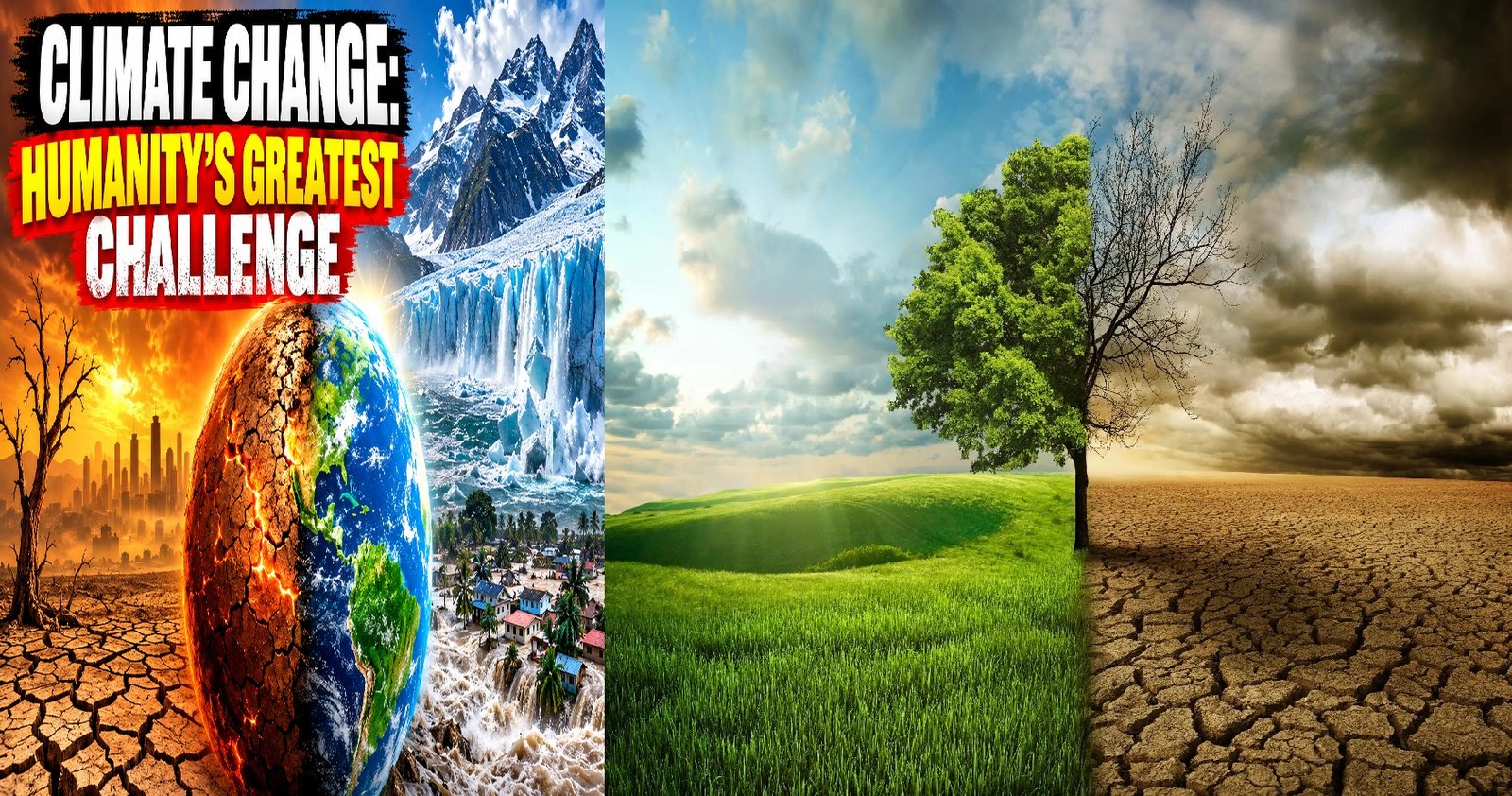
Climate Change: Humanity’s Greatest Challenge and the Fight to Save Our Future
Climate Change: Humanity’s Greatest Challenge and the Fight to Save Our Future
Climate Change: Humanity’s Greatest Challenge – Climate change threatens ecosystems, economies, and future generations. Explore its devastating impacts, global risks, and solutions to the climate crisis.
Climate Change: A Global Crisis That Is Already Reshaping Our World
Amit Kaul – For Digital Desk, Bengaluru: October 14, 2026 – Climate change is no longer a far-off environmental threat. From melting Himalayan glaciers and devastating floods to prolonged droughts and rising economic losses, the climate crisis is transforming life across the planet. Scientists warn that without stronger action, the consequences for ecosystems, livelihoods, and future generations could become increasingly severe.
Imagine a world where summers become dangerously hot, farmers struggle to grow enough food, coastal communities face repeated flooding, and millions of families are forced to abandon the places they have called home for generations. For many people, this is no longer an imaginary scenario.
https://aamnewsnetwork.com/tips-for-longevity-4-habits-to-live-100-years/
Across continents, communities are already experiencing the consequences of a warming planet. Record-breaking temperatures, destructive wildfires, unpredictable rainfall and rapidly melting ice are revealing the scale of one of humanity’s most serious challenges.
Climate change is more than just an environmental issue. It is a humanitarian, economic, agricultural and developmental crisis that threatens the foundations of modern civilisation. The question confronting humanity is no longer whether climate change is happening. The scientific evidence is overwhelming. The more pressing question is whether governments, industries and societies can respond quickly enough to limit its most dangerous consequences.
Climate Change: Humanity’s Greatest Challenge – Why Is Climate Change Becoming More Dangerous?
Earth’s climate has changed naturally throughout its history. However, the rapid warming observed since the industrial era is primarily driven by human activities, particularly the burning of fossil fuels such as coal, oil, and natural gas.
These activities release greenhouse gases, including carbon dioxide and methane, which trap additional heat in the atmosphere. According to the Intergovernmental Panel on Climate Change (IPCC), human activities have unequivocally caused global warming.
The consequences extend far beyond warmer weather. Rising temperatures intensify many forms of extreme weather, alter rainfall patterns, accelerate ice loss, and contribute to rising sea levels. Although individual disasters have multiple causes, climate change is increasing the likelihood or severity of numerous climate-related hazards. Every additional fraction of a degree of warming increases risks for vulnerable populations and natural systems.
Melting Glaciers and Rising Seas: A Warning From Nature
Some of the clearest evidence of climate change can be found in the world’s frozen regions.
Glaciers are retreating in many mountain ranges, including the Himalayas, while Greenland and Antarctica are losing land ice.
For countries such as India, Nepal, Bhutan and Pakistan, the consequences are particularly significant. Himalayan glaciers help sustain major river systems that support agriculture, hydropower, ecosystems and communities across Asia.
Their continued retreat threatens to alter seasonal water availability and can increase hazards associated with unstable glacial lakes.
Meanwhile, rising sea levels are creating additional risks for coastal cities and island nations.
Mumbai, Kolkata, Jakarta and numerous other densely populated coastal centres face increasing exposure to flooding, storm surges and saltwater intrusion.
For families living in low-lying coastal settlements, climate change can threaten not only property but also livelihoods, cultural heritage and long-established communities.
Climate Change: Humanity’s Greatest Challenge – Climate Change Is Destroying the Balance of Ecosystems
Nature depends on complex relationships between plants, animals, water, soil and climate.
When temperatures rise or rainfall patterns change, these relationships can become disrupted.
Coral reefs face increasingly severe marine heatwaves. Forest ecosystems experience growing pressure from drought, fire, and pests. As temperatures change, many species are moving their geographic ranges.
Others cannot adapt or relocate quickly enough.
Biodiversity loss carries consequences for humanity as well.
Forests absorb carbon dioxide, wetlands help reduce flooding, and pollinating insects support food production.
When ecosystems deteriorate, societies lose vital natural services that support public health, agriculture, and economic stability.
Protecting biodiversity is therefore not separate from tackling climate change. The two challenges are closely interconnected.
The Economic Cost: How Climate Change Threatens Global Prosperity
Climate change is also becoming a major economic concern. Extreme weather can destroy infrastructure, interrupt supply chains, damage agricultural production, and increase insurance costs.
Businesses face disruptions from floods, storms, water shortages, and heat-related productivity losses.
Developing economies often face particularly severe challenges because many communities depend heavily on climate-sensitive sectors such as agriculture and fisheries.
For India, rising temperatures and unpredictable monsoon patterns create risks for farmers, daily-wage workers, and rapidly expanding urban centres.
Heatwaves can reduce outdoor working hours, while irregular rainfall can affect crop yields and rural incomes.
The resulting economic pressure may contribute to higher food prices, greater public expenditure and increased financial vulnerability.
The cost of climate inaction is not limited to environmental destruction. It also includes lost livelihoods, damaged infrastructure and reduced opportunities for economic development.
Food Security and Water Scarcity: A Growing Humanitarian Emergency
Food and water are among the most immediate concerns associated with climate change.
Agriculture depends on relatively predictable seasonal conditions. When rainfall becomes erratic, heatwaves intensify, or droughts persist, food production becomes more difficult.
Crops such as wheat, rice and maize are vulnerable to heat and water stress, although impacts vary by region, farming practices and adaptation measures.
Water scarcity can also intensify competition between agricultural, industrial and domestic users.
For poorer households, even modest increases in food prices can become devastating.
Climate-related disasters can further displace populations, particularly when they interact with poverty, weak infrastructure and existing social or political instability.
Migration is rarely caused by climate change alone, but environmental pressures can make already difficult living conditions increasingly unsustainable.
Climate Change: Humanity’s Greatest Challenge – Why Future Generations Face the Greatest Risks
Perhaps the most troubling dimension of climate change is its long-term impact.
Children born today will inherit the consequences of decisions made by governments, corporations and consumers in the coming decades.
If greenhouse gas emissions remain high, future generations could face more intense heat extremes, greater coastal risks and widespread ecological disruption.
Some changes, including aspects of sea-level rise and ice-sheet loss, will continue over centuries or longer.
This raises a fundamental question of intergenerational justice.
Should future generations bear the consequences of environmental damage created before they had any opportunity to influence the decisions?
Climate change is therefore not only a scientific or economic issue. It is also a question of responsibility, fairness and the kind of world humanity chooses to leave behind.
The Latest Scientific Warning: Global Temperatures Continue to Rise
The latest available annual assessment from the World Meteorological Organization paints a concerning picture.
Its State of the Global Climate 2025 report, published in March 2026, confirmed that 2015–2025 were the 11 hottest years on record. Global temperatures in 2025 were approximately 1.43°C above the pre-industrial average.
The report also highlighted continued ocean warming, glacier retreat and increasingly serious extreme-weather impacts.
World Meteorological Organization
Scientists emphasise that a single year above 1.5°C does not, by itself, mean the Paris Agreement’s long-term temperature threshold has been permanently crossed. Nevertheless, the sustained warming trend reinforces the urgency of reducing emissions.
Can Humanity Still Prevent the Worst Consequences?
Despite the alarming scientific evidence, meaningful solutions remain available.
Renewable energy technologies, including solar and wind power, can reduce dependence on fossil fuels. More efficient buildings, cleaner transport systems and improved industrial processes can further lower emissions.
Protecting forests, restoring wetlands and adopting climate-resilient agricultural practices are equally important.
Governments must also invest in adaptation measures, including stronger flood defences, heat-action plans, drought-resistant infrastructure and early-warning systems.
International cooperation remains essential, particularly in supporting developing countries that face substantial climate risks despite having contributed comparatively little to historical emissions.
The IPCC concludes that rapid, sustained emissions reductions, combined with stronger adaptation, can limit future damage and deliver benefits for human health and ecosystems.
Conclusion: The Future Depends on Decisions Made Today
Climate change represents a defining test of humanity’s ability to act collectively in the face of a shared threat.
Its consequences do not respect national borders, economic divisions, or political differences.
A changing climate can affect the food people eat, the water they drink, the homes they inhabit and the opportunities available to their children.
https://digitalamitkaul.online/eating-walnuts-every-morning-benefits/
Yet the future is not predetermined.
Every reduction in greenhouse gas emissions matters. Every ecosystem protected strengthens environmental resilience. Every investment in cleaner energy and climate adaptation can help reduce future risks.
The greatest danger is not simply that the planet is warming. It is that humanity may fail to respond with the urgency, cooperation, and determination the crisis demands.
The choices made today will help determine whether future generations inherit a world of escalating environmental instability or one in which economic development and ecological sustainability can coexist.
Author Bio
Amit Kaul is a professional content writer and digital news strategist based in Bengaluru (India). With over a decade of experience covering transportation, technology, and travel, Amit specializes in creating SEO-optimized, engaging news content for digital platforms. He focuses on in-depth reporting, trend analysis, and reader-friendly storytelling, ensuring articles reach a global audience effectively.