
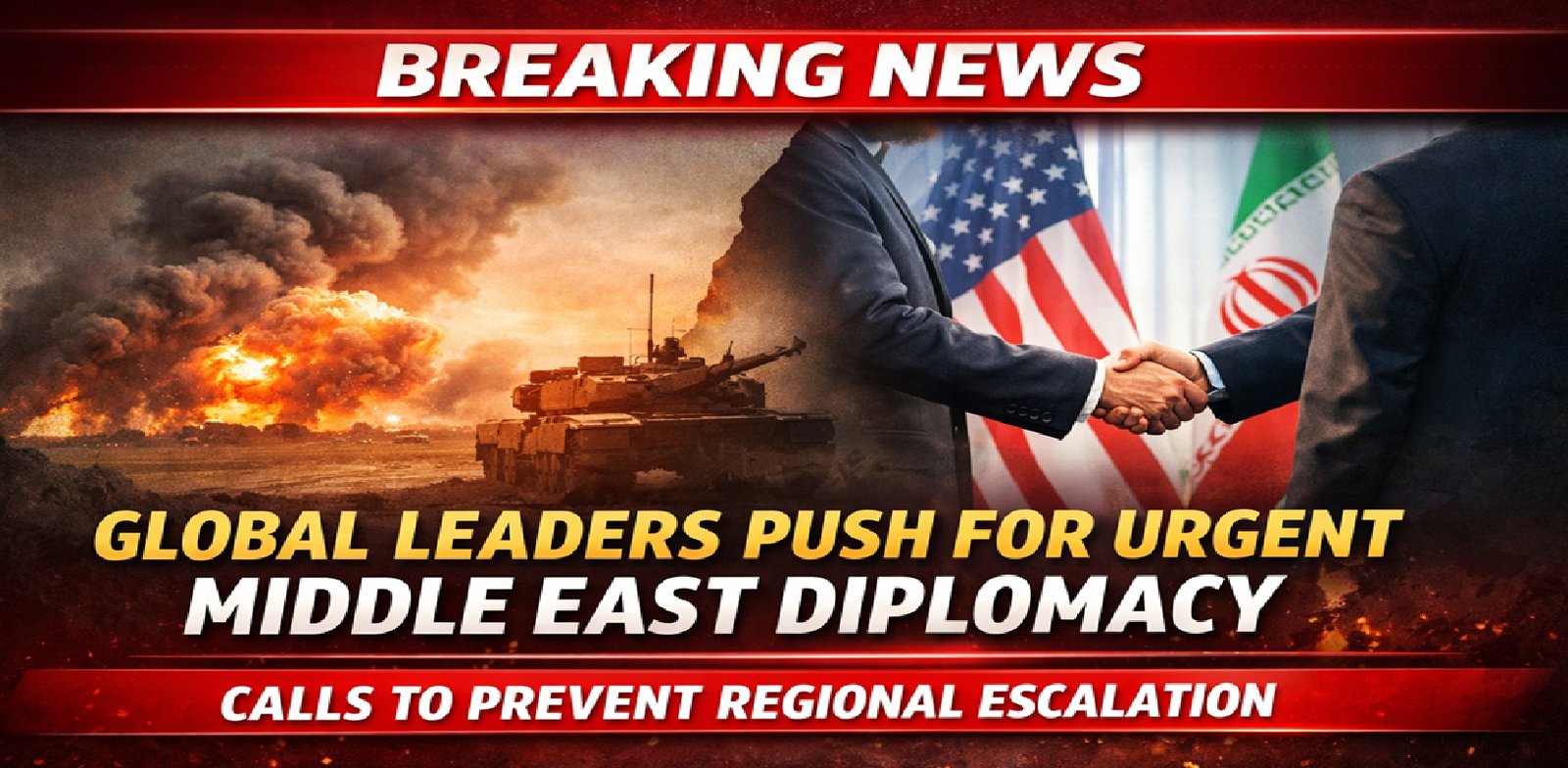
Global Leaders Push for Urgent Diplomacy to Prevent Wider Regional Conflict
Global Leaders Push for Urgent Diplomacy to Prevent Wider Regional Conflict
Global Leaders Push for Urgent Diplomacy: World leaders call for urgent diplomacy as rising tensions threaten regional stability.
Global Leaders Push for Urgent Diplomacy as Middle East Tensions Threaten Regional Stability
Amit Kaul – For Digital Desk, Bengaluru: March 12, 2026 – International leaders are urgently calling for diplomatic negotiations to prevent further escalation in the Middle East, as growing tensions in the region raise concerns about the possibility of a broader geopolitical conflict. Governments and international organizations have warned that continued hostilities could destabilize not only the Middle East but also global political and economic stability.
In recent days, several countries have urged restraint from all parties involved, emphasizing the importance of dialogue and diplomatic engagement to avoid a deepening crisis. Officials say the situation remains highly sensitive, with potential consequences for global security, energy markets, and international trade.
https://digitalamitkaul.online/us-israel-military-operations-against-iran-middle-east-tensions/
Rising Concerns Among Global Leaders
Leaders from major world powers have intensified diplomatic efforts aimed at calming tensions. Governments in Europe, Asia, and North America have issued statements urging all sides to exercise restraint and avoid actions that could trigger further escalation.
Many diplomats believe that the current situation requires immediate negotiations to reduce the risk of miscalculation. Military confrontations in sensitive regions can rapidly spiral into broader conflicts, especially when multiple countries are involved either directly or indirectly.
International observers say the Middle East remains one of the most strategically significant regions in the world due to its geopolitical importance and energy resources. As a result, even limited military tensions can have far-reaching consequences.
Global Leaders Push for Urgent Diplomacy: United Nations and International Organizations Step In
The United Nations has begun coordinating diplomatic outreach to encourage peaceful negotiations between the involved parties. Officials within the organization say diplomatic channels are being actively used to establish communication and explore possible pathways to de-escalation.
Several international organizations and regional alliances are also participating in discussions designed to prevent the situation from deteriorating further. Diplomatic envoys are reportedly engaging with regional leaders in an effort to build trust and reduce tensions.
Experts note that international mediation has historically played a critical role in resolving complex geopolitical crises. By bringing multiple stakeholders to the negotiating table, global institutions can help facilitate dialogue and reduce the risk of open conflict.
Impact on Global Security and Stability
The escalating tensions have raised alarm among security analysts worldwide. The Middle East sits at the center of several major trade and energy routes, making stability in the region crucial for global economic health.
Energy markets have already shown signs of volatility as investors react to uncertainty surrounding the conflict. Any disruption to key shipping routes or energy infrastructure could significantly affect global oil and gas supplies, potentially triggering economic ripple effects across multiple continents.
Security experts warn that continued hostilities could also increase the risk of cyber conflicts, proxy confrontations, or disruptions to international transportation networks.
Global Leaders Push for Urgent Diplomacy: Economic and Energy Market Implications
Global markets are closely watching developments in the Middle East. Investors and policymakers are aware that geopolitical instability can quickly translate into economic turbulence.
The region plays a major role in global energy production and transportation. Shipping routes that pass through the Middle East handle a significant share of the world’s oil exports. Any threat to these routes could lead to higher energy prices and increased inflation in many countries.
Financial analysts say markets typically respond quickly to geopolitical uncertainty. Stock markets, commodity prices, and currency exchanges often fluctuate as investors seek safe assets during periods of instability.
Calls for Dialogue and Peaceful Resolution
Despite the rising tensions, many global leaders remain optimistic that diplomatic negotiations can prevent a larger conflict. Governments are emphasizing the importance of dialogue, transparency, and international cooperation in resolving the crisis.
Political analysts believe that strong diplomatic engagement can still prevent escalation if all parties prioritize negotiation over confrontation. Peaceful solutions remain the most effective path to maintaining long-term regional stability.
Diplomacy has historically proven to be a powerful tool in defusing geopolitical tensions. By encouraging dialogue and reducing misunderstandings, international mediation can create opportunities for compromise and cooperation.
https://aamnewsnetwork.com/saudi-warns-iran-retaliation/
Global Leaders Push for Urgent Diplomacy: The Path Forward
As diplomatic efforts continue, the international community remains focused on preventing further escalation in the Middle East. Governments are working through diplomatic channels to maintain open communication and explore potential pathways toward stability.
The coming weeks are expected to be critical in determining whether negotiations can successfully reduce tensions. Many observers believe that sustained diplomatic engagement will be essential to avoiding broader regional conflict.
For now, global leaders are united in their message: dialogue, restraint, and cooperation remain the most effective ways to safeguard peace and maintain international stability.
Author Bio
Amit Kaul is a professional content writer and digital news strategist based in Bengaluru (India). With over a decade of experience covering transportation, technology, and travel, Amit specializes in creating SEO-optimized, engaging news content for digital platforms. He focuses on in-depth reporting, trend analysis, and reader-friendly storytelling, ensuring articles reach a global audience effectively.



Pingback: Middle East Conflict Escalates as US–Iran Tensions Rise, Raising Fears of Wider Regional War - ANN
Pingback: White House Debates Strategy for Ending Iran Conflict Amid Escalating Regional Tensions - DNN
Pingback: Israel-Iran War Day 16: IDF Launches Extensive Strikes on Western Iran - DNN