
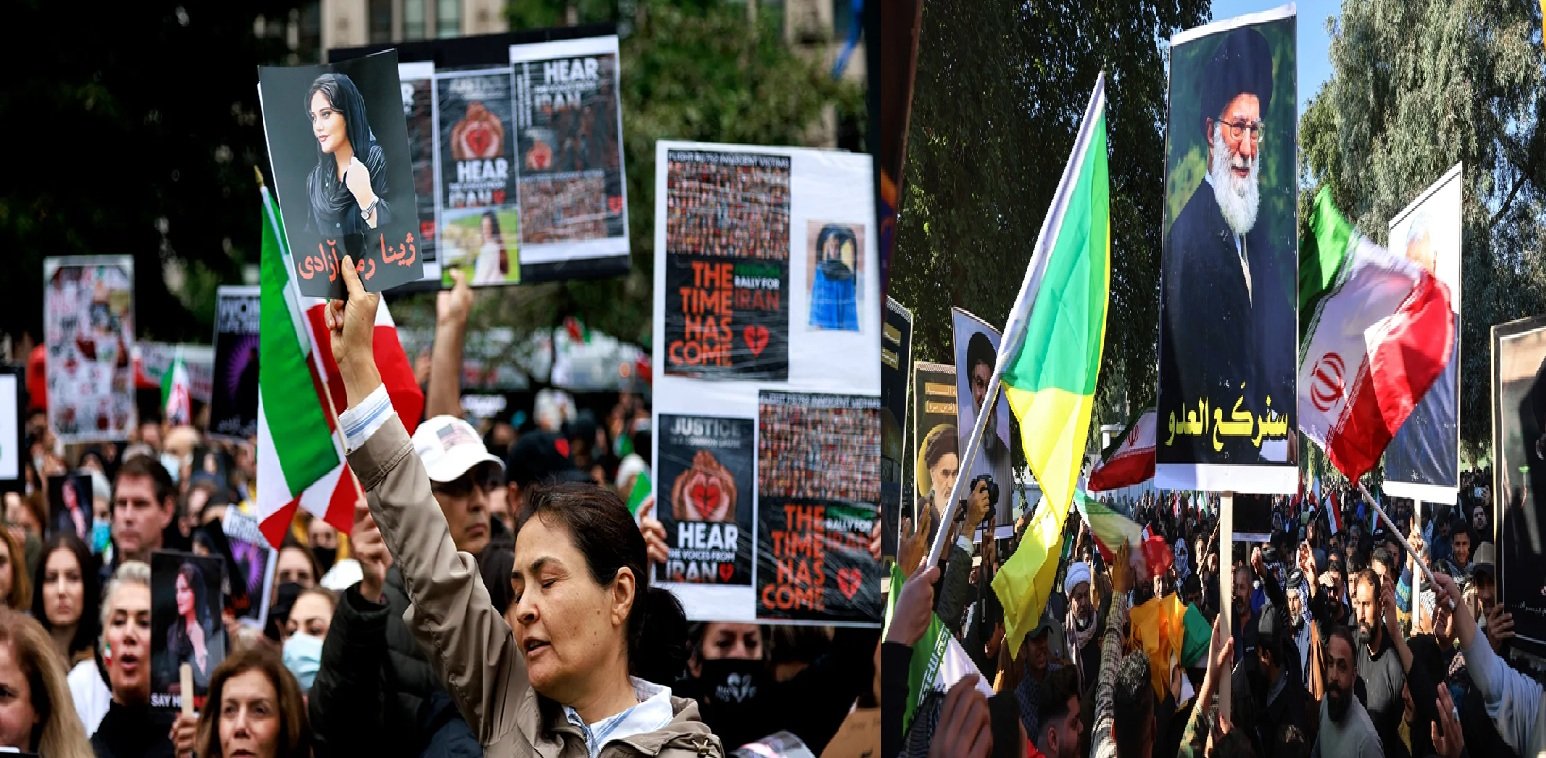
Iran Protests Persist Despite Internet Restrictions and Crackdown
Iran Protests Persist Despite Internet Restrictions and Crackdown
Iran Protests Persist: Widespread protests continue across Iran despite a near-total internet blackout and increased security force deployment. As demonstrators defy communication shutdowns, the country faces one of its most severe domestic challenges in years, with growing international concern over human rights abuses and digital repression.
Amit Kaul – For Digital Desk, Bengaluru: February 11, 2026 – Pro-government unrest in Iran remains unabated as anti-regime demonstrations continue across multiple cities, even amidst sweeping internet and communication restrictions and a heavy show of force by security personnel. The protests, which began in late December 2025 amid deep economic hardship and rising public anger at governance, have entered their third month, presenting perhaps the most sustained challenge to the Islamic Republic in years.
For more than a month, authorities have imposed a near-total internet blackout and intermittent communication restrictions designed to sever Iranians’ links to the outside world and hinder protest coordination. According to network monitoring groups, the nationwide shutdown has drastically limited connectivity — in some regions to less than 5 % of normal levels — and cut access to global platforms, with only heavily monitored domestic services operating at times.
https://digitalamitkaul.online/iran-us-resume-nuclear-talks-turkiye-2026/
Despite these constraints, crowds have continued to take to the streets in Tehran, Mashhad, Isfahan, and other cities, chanting against the clerical leadership and calling for reforms. Observers say protesters are using a mix of low-tech communication and sporadic mobile re-connections to organise and spread information internally, defying the government’s efforts to isolate them digitally. International human rights organisations say these restrictions not only block protest coordination but also conceal reports of abuses from entering global media.
Iran Protests Persist: Why the Protests Continue
The roots of the protests trace back to a combination of economic despair and political disillusionment. Rising inflation, unemployment, and the plummeting value of the Iranian rial have devastated household purchasing power, triggering public frustration that quickly morphed into broader demonstrations against political repression and lack of accountability. Cities across Iran’s 31 provinces witnessed widespread participation in the initial weeks, with protesters demanding an end to what they perceive as entrenched authoritarian rule.
Analysts note that while the internet blackout has slowed the flow of information outside Iran, it has not quashed public sentiment or participation. In fact, some residents say the shutdown has galvanised more people to join the demonstrations, as frustration over isolation and economic hardship grows. Rumours of partial reconnections during brief windows have been seized upon by activists to boost morale and planning.
The Government’s Response: Security Measures and Restrictions
In response to the unrest, Iranian authorities have dramatically increased the presence of security forces, including the Islamic Revolutionary Guard Corps (IRGC), which now patrol key urban centres and maintain checkpoints along major roadways. Martial law-like conditions have been reported, with heavily armed units and armoured vehicles seen in areas with significant protest histories.
According to rights groups and journalist accounts, the crackdown has involved violent dispersals, mass arrests, and severe limitations on freedom of movement. Amnesty International has documented widespread use of excessive force, arbitrary detentions, and other tactics intended to suppress dissent and prevent large gatherings. These measures are coupled with the digital shutdown, which organisations say serves not just to disrupt coordination but to hide the true scale of the unrest from the global community.
Security officials have, at times, justified internet restrictions as necessary for national stability and attributed connectivity issues to cyberattacks or technical failures. Meanwhile, the judiciary has signalled plans to pursue harsh punishments against those labelled “rioters,” echoing statements that emphasise deterrence over dialogue.
Iran Protests Persist: Human Rights and International Pressure
The sustained protests and the government’s restrictive measures have drawn sharp criticism from international watchdogs and foreign governments. The United Nations Human Rights Council adopted a resolution condemning the prolonged internet blackout as a violation of international human rights standards, urging Tehran to restore unrestricted access and respect freedom of expression.
Human rights advocates argue that the digital shutdown not only infringes on civil liberties but also hinders transparency regarding reported abuses, including lethal force used against civilians, arbitrary detentions, and other violations documented by multiple organisations. Iran’s Supreme Council of National Security, however, has defended the measures as necessary to counter what it calls foreign-directed destabilisation.
International concern is further fuelled by reports of extended prison sentences for prominent critics. Recently, Nobel Peace Prize laureate Narges Mohammadi was sentenced to additional years in prison, a move that observers say reflects a broader strategy to silence dissent across civil society.
Social and Economic Impact
The prolonged communication restrictions have had considerable social and economic costs. Disruptions to digital connectivity have hampered commerce, banking, and basic communication, adding to the daily hardships faced by ordinary Iranians. With mobile and internet services pivotal to modern life, the blackout has affected families, businesses, and essential services, pushing many into informal networks or alternative communication methods.
From Tehran’s bustling bazaars to university campuses where exam boycotts have been used as protest gestures, the unrest has permeated diverse segments of society. While widespread strikes are difficult to verify due to ongoing restrictions, there are credible indications that grassroots movements — including student gatherings and symbolic protest actions — continue to signal public dissatisfaction.
Iran Protests Persist: What Happens Next
With no clear end in sight, Iran’s protest movement has entered a fraught and unpredictable phase. The interplay between digital repression, grassroots defiance, and international pressure indicates that the conflict extends beyond isolated street protests to encompass larger tensions over governance, rights, and national identity.
https://aamnewsnetwork.com/us-china-trade-talks-geneva-tariff-technology-2026/
For observers inside and outside Iran, the resilience of protesters in the face of significant obstacles — from internet blackouts to security crackdowns — remains a defining feature of this chapter in the country’s history. Whether the movement will achieve substantive political change, fade under state pressure, or pivot into new forms of resistance is a matter of both national consequence and global attention.
Author Bio
Amit Kaul is a professional content writer and digital news strategist based in Bengaluru (India). With over a decade of experience covering transportation, technology, and travel, Amit specializes in creating SEO-optimized, engaging news content for digital platforms. He focuses on in-depth reporting, trend analysis, and reader-friendly storytelling, ensuring articles reach a global audience effectively.


Pingback: Global Headlines Today: Protests, Peace Talks, Market Volatility, and Major Cultural Events Dominate February 12, 2026 - DNN
Pingback: French President Macron to Visit India on February 17 to Boost Strategic Trade and Defence Ties - DNN
Pingback: Iran Protests Continue Despite Tightened Internet Controls - DNN
Pingback: Bangladesh Parliamentary Elections 2026: Opposition BNP Wins Majority, Reshaping Dhaka’s Political Landscape - ANN
Pingback: US to Deploy Second Aircraft Carrier to Middle East Amid Iran Tensions - DNN
Pingback: Daily World News Digest — 15 February 2026 - ANN
Pingback: Europe Pushes Back Against U.S. “Civilizational Erasure” Claim at Global Security Summit - DNN
Pingback: India–France Launch Special Strategic Partnership During Macron’s Mumbai Visit, Boosting Defence and Tech Cooperation - ANN
Pingback: Iran Temporarily Closes Strait of Hormuz for Military Drills Amid U.S. Negotiations - DNN