
Davos 2026 Signals a Major Shift in Global Power Dynamics
Davos 2026 Signals a Major Shift in Global Power Dynamics
Davos 2026 Signals a Major Shift: World leaders at Davos 2026 acknowledge a changing global order shaped by populism, economic realignment, and geopolitical fragmentation.
Davos 2026 Signals a Major Shift in Global Power Dynamics
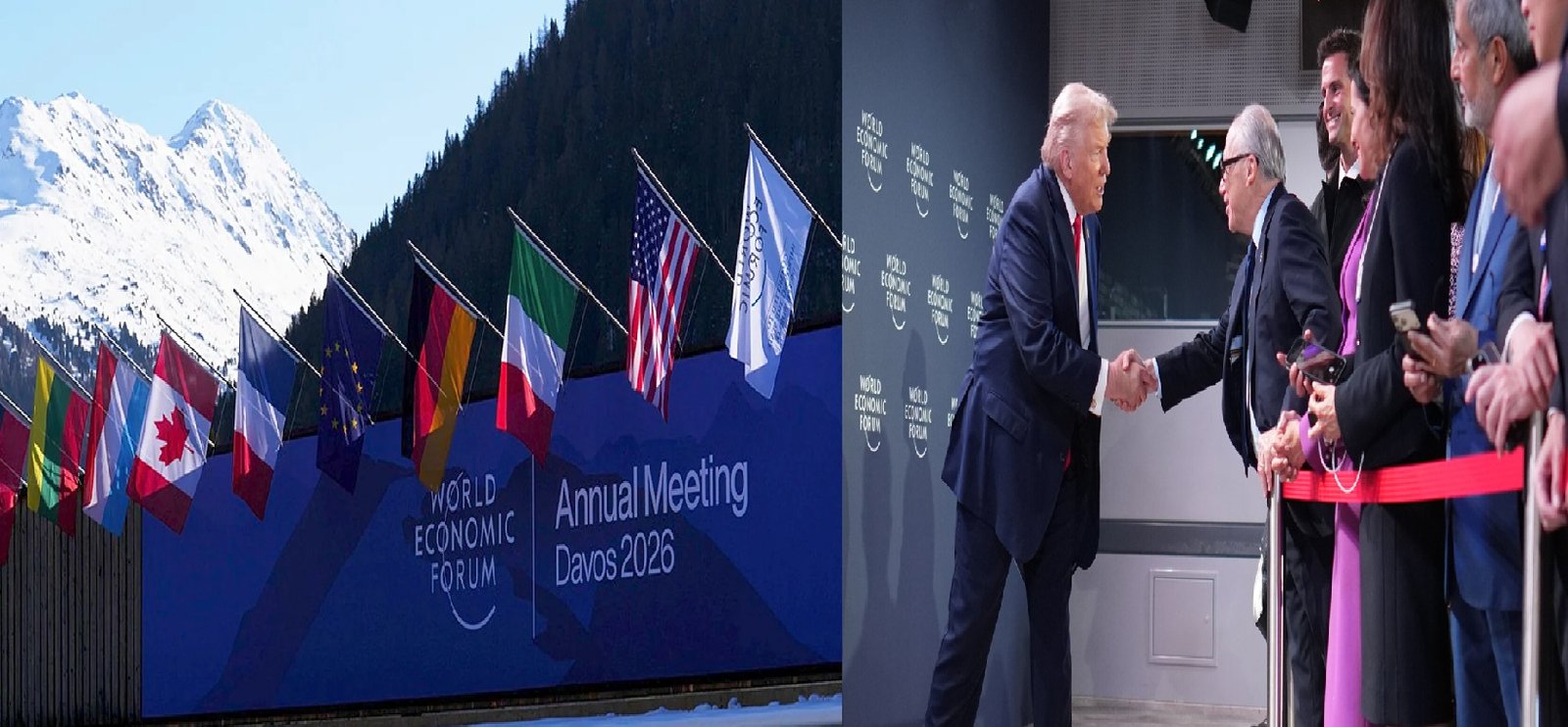
Amit Kaul – For Digital Desk, Bengaluru: January 23, 2026 – The World Economic Forum (WEF) 2026 in Davos has underscored a decisive moment in global history, as political leaders, economists, and corporate executives openly acknowledged that the post-Cold War global order is undergoing a profound transformation. Discussions throughout the summit reflected a more cautious, fragmented, and nationally driven world, replacing the optimism that once defined global cooperation.
Held against the backdrop of geopolitical tensions, economic uncertainty, and climate-related disruptions, Davos 2026 revealed a growing consensus: the era of globalization as it was known for decades is fading, giving way to a multipolar and more contested international system.
Davos 2026 Signals a Major Shift: Populism and Nationalism Reshape Global Politics
One of the most prominent themes at Davos this year was the continued rise of populism and economic nationalism. Leaders from both developed and emerging economies acknowledged growing domestic pressures to prioritize national interests, secure borders, and protect local industries.
https://digitalamitkaul.online/trump-drops-tariff-threat-greenland-davos/
Several panel discussions highlighted how voter dissatisfaction, widening income inequality, and cultural polarization have weakened trust in multilateral institutions such as the United Nations, World Trade Organization, and even the World Economic Forum itself. Speakers noted that governments are now more inclined to pursue bilateral agreements and regional alliances rather than global consensus-driven frameworks.
Political analysts at Davos suggested that populism is no longer a temporary trend but a structural feature of modern democracies, influencing trade policies, immigration laws, and international diplomacy.
Economic Realignment and Supply Chain Fragmentation
Economic realignment dominated conversations among finance ministers and CEOs. The COVID-era supply chain shocks and subsequent geopolitical conflicts have accelerated a shift toward “friend-shoring” and “near-shoring,” as nations seek to reduce dependence on rival economies.
Executives from manufacturing, technology, and energy sectors emphasized that global supply chains are being redesigned for resilience rather than efficiency. While this approach enhances national security and reduces vulnerability, it also increases costs and risks, slowing global economic growth.
Emerging markets, particularly in Asia, Africa, and Latin America, were discussed as potential beneficiaries of this restructuring. However, economists cautioned that uneven investment flows could deepen global inequalities if not managed carefully.
Davos 2026 Signals a Major Shift: Geopolitical Fragmentation and Strategic Competition
Geopolitical fragmentation was another defining feature of Davos 2026. Discussions frequently returned to intensifying strategic competition among major powers, particularly in areas such as technology, defense, energy security, and artificial intelligence.
Speakers warned that technological decoupling—especially in semiconductors, AI, and green technologies—could create parallel global systems, limiting collaboration and innovation. Several leaders urged restraint, noting that excessive fragmentation could undermine global efforts to address shared challenges like climate change and pandemics.
At the same time, there was acknowledgment that geopolitical rivalry is reshaping alliances, with middle powers gaining greater influence as they navigate between competing blocs.
Climate Risks and Policy Dilemmas
Climate change remained high on the Davos agenda, but with a noticeably pragmatic tone. While leaders reaffirmed commitments to net-zero goals, many admitted that economic pressures and energy security concerns are complicating climate action.
Panels on climate finance highlighted the gap between pledges and actual funding for developing nations. Business leaders stressed the need for predictable regulatory frameworks to accelerate green investments, warning that policy uncertainty could stall progress.
Despite these challenges, Davos 2026 showcased growing momentum in clean energy innovation, with breakthroughs in hydrogen, battery storage, and carbon capture drawing attention from global investors.
Davos 2026 Signals a Major Shift: A More Cautious Global Mood
Observers noted a marked shift in the overall mood at Davos compared to previous years. Optimism about globalization and digital transformation has been replaced by realism, caution, and strategic recalibration. Leaders openly discussed risks rather than opportunities, reflecting a world grappling with uncertainty on multiple fronts.
Experts say this change in tone signals a new phase in global governance—one where cooperation still exists but is increasingly transactional and interest-driven.
What Davos 2026 Means for the Future
The conversations at Davos 2026 suggest that the global order is not collapsing but evolving. Power is becoming more dispersed, alliances more flexible, and policies more inward-looking. For businesses and governments alike, adaptability has emerged as the key to navigating this complex environment.
https://aamnewsnetwork.com/google-deepmind-chief-china-ai-gap/
As the summit concluded, one message stood out clearly: the world is entering an era defined less by universal rules and more by strategic choices. How nations manage this transition will shape global stability, economic growth, and international cooperation for years to come.
Author Bio
Amit Kaul is a professional content writer and digital news strategist based in Bengaluru (India). With over a decade of experience covering transportation, technology, and travel, Amit specializes in creating SEO-optimized, engaging news content for digital platforms. He focuses on in-depth reporting, trend analysis, and reader-friendly storytelling, ensuring articles reach a global audience effectively.



Pingback: ICE Memo Sparks Fear as Agents May Enter Homes Without Judicial Warrants - DNN
Pingback: Historic EU-India Summit 2026 Concludes in New Delhi: Trade, Security, and Strategic Partnership Elevated - DNN
Pingback: India–EU Landmark Trade Deal: A Historic Free Trade Agreement Set to Transform Bilateral Commerce - ANN
Pingback: U.S. Officials Rebuke Europe After India–EU Free Trade Agreement, Raising Geopolitical Trade Tensions - ANN