
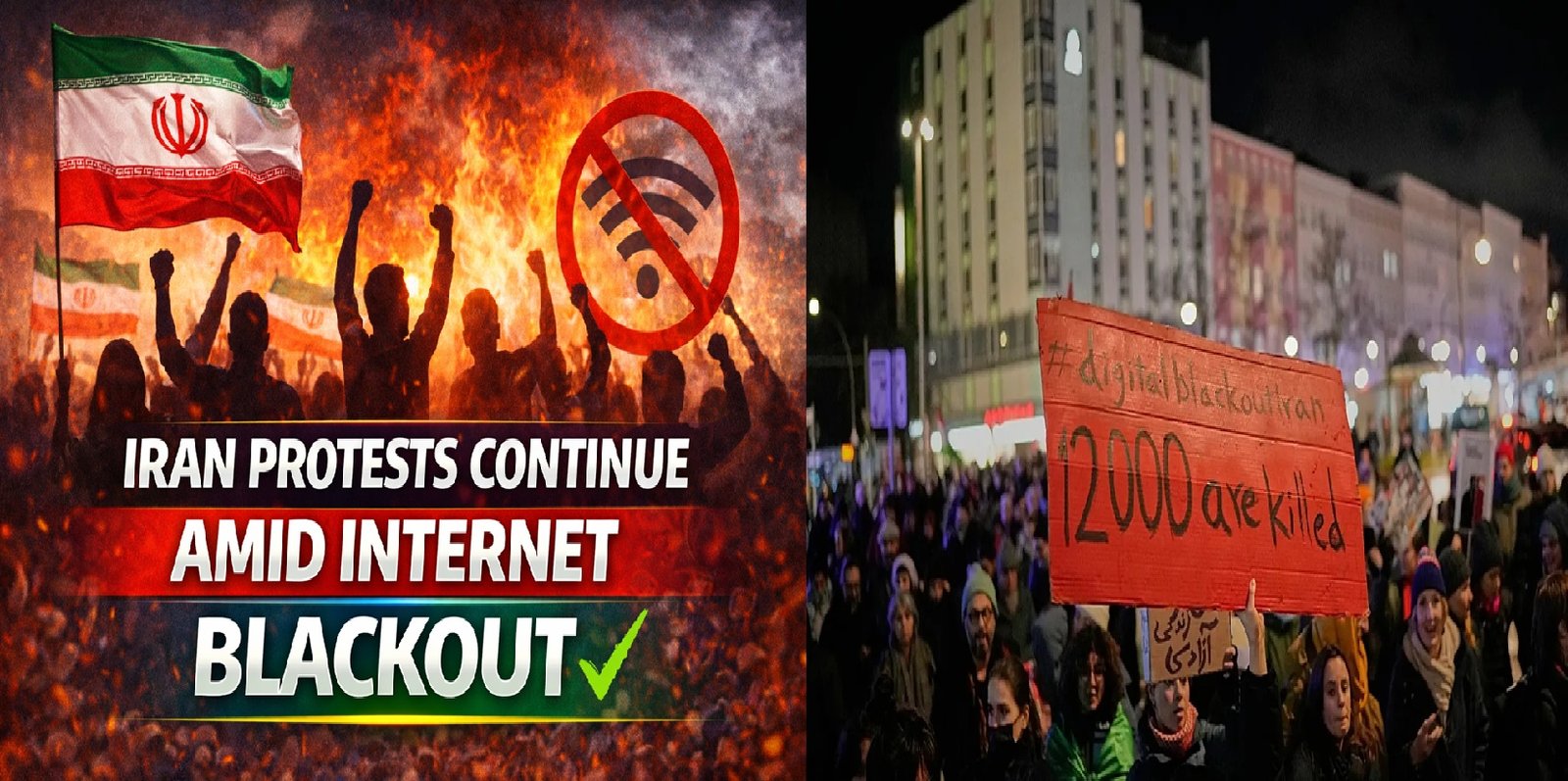
Iran Protests Continue Amid Widespread Internet Blackout
Iran Protests Continue Amid Widespread Internet Blackout
Iran Protests Continue: Protests persist across Iran despite a near-total internet blackout, as authorities intensify crackdowns and rights groups warn of mass detentions and economic disruption.
Iran Protests Intensify Despite Near-Total Internet Shutdown
Amit Kaul – For Digital Desk, Bengaluru: January 22, 2026 – Protests across Iran have continued to escalate despite authorities enforcing a near-total internet blackout, highlighting growing public anger and the limits of digital repression. Demonstrations have been reported in several major cities, with citizens voicing grievances over economic hardship, political restrictions, and alleged human rights abuses. The blackout, one of the most extensive imposed in recent years, has significantly disrupted daily life while drawing sharp criticism from international organizations and digital rights advocates.
According to human rights groups, the government has intensified security measures alongside the internet shutdown, deploying riot police and paramilitary forces to curb gatherings. Reports indicate widespread detentions, with activists and journalists among those allegedly taken into custody. While official figures remain unavailable due to information restrictions, independent observers suggest that hundreds may have been detained in recent days.
Iran Protests Continue: Impact of the Internet Blackout
The internet shutdown has severely affected Iran’s economy and essential services. Businesses reliant on online platforms, including e-commerce, ride-hailing services, and digital payments, have reported sharp losses. Banking services and mobile payment systems have also been disrupted, causing frustration among citizens who depend on digital transactions for everyday needs.
Families have struggled to communicate with relatives both inside and outside the country, while students and professionals have been cut off from educational platforms and remote work. Analysts note that Iran’s growing reliance on digital infrastructure has made internet blackouts increasingly costly, economically and socially.
https://digitalamitkaul.online/syria-moves-into-kurdish-territories-middle-east-conflict-2/
Despite these restrictions, protests have persisted, with demonstrators adapting by organizing through word of mouth and offline networks. Observers say this resilience underscores deep-rooted dissatisfaction that cannot be easily silenced by digital controls alone.
Government Strategy and Digital Control
Iranian authorities have defended the internet restrictions as necessary to maintain public order and prevent what they describe as misinformation and foreign interference. State media has portrayed the protests as isolated incidents driven by external actors, a narrative strongly disputed by activists and independent analysts.
Experts argue that Iran’s use of internet shutdowns reflects a broader global trend in which governments increasingly rely on digital tools to manage unrest. However, they warn that such measures often backfire, fueling public resentment and drawing international scrutiny.
“The blackout is not just about controlling protests; it’s about controlling the narrative,” said a regional analyst specializing in Middle Eastern politics. “But in the long term, these tactics tend to erode trust and deepen the crisis.”
Iran Protests Continue: International Reaction and Human Rights Concerns
International organizations, including human rights watchdogs and digital freedom groups, have condemned the internet shutdown and the reported use of force against protesters. Calls have grown for Iranian authorities to restore connectivity, respect freedom of expression, and allow independent monitoring of the situation.
Several governments have urged restraint and emphasized the importance of protecting civil liberties, even during periods of unrest. While diplomatic pressure has mounted, analysts note that meaningful international intervention remains limited, given the complex geopolitical dynamics surrounding Iran.
Human rights advocates stress that internet access is increasingly recognized as a fundamental right, particularly during crises when communication can be a matter of safety and survival. The blackout, they argue, not only suppresses dissent but also prevents documentation of potential abuses.
Economic and Social Fallout
Beyond the immediate political implications, the prolonged internet shutdown threatens to worsen Iran’s already fragile economy. With inflation high and unemployment a persistent challenge, further disruptions could deepen public frustration. Small businesses, freelancers, and startups are among the hardest hit, as many depend entirely on digital platforms to operate.
Socially, the blackout has heightened feelings of isolation and anxiety among citizens. Mental health professionals warn that prolonged uncertainty and lack of information can exacerbate stress and fear, particularly among young people who have been at the forefront of recent protests.
Iran Protests Continue: What Lies Ahead
As protests continue despite the blackout, questions remain about how long authorities can sustain such measures without high economic and political costs. Analysts suggest that while internet restrictions may temporarily slow information flow, they are unlikely to address the underlying causes of unrest.
The coming days will be critical in determining whether tensions ease through dialogue or escalate further. For now, Iran remains largely cut off from the global digital community, even as voices within the country continue to demand change.
https://aamnewsnetwork.com/iran-fresh-protests-internet-restrictions-tighten/
For the international community, the situation serves as a stark reminder of the growing role of digital freedoms in modern protest movements—and the high stakes involved when governments attempt to shut them down.
Author Bio
Amit Kaul is a professional content writer and digital news strategist based in Bengaluru (India). With over a decade of experience covering transportation, technology, and travel, Amit specializes in creating SEO-optimized, engaging news content for digital platforms. He focuses on in-depth reporting, trend analysis, and reader-friendly storytelling, ensuring articles reach a global audience effectively.



Pingback: Abu Dhabi Named World’s Safest City 2026, Tops Global Safety Rankings - ANN