
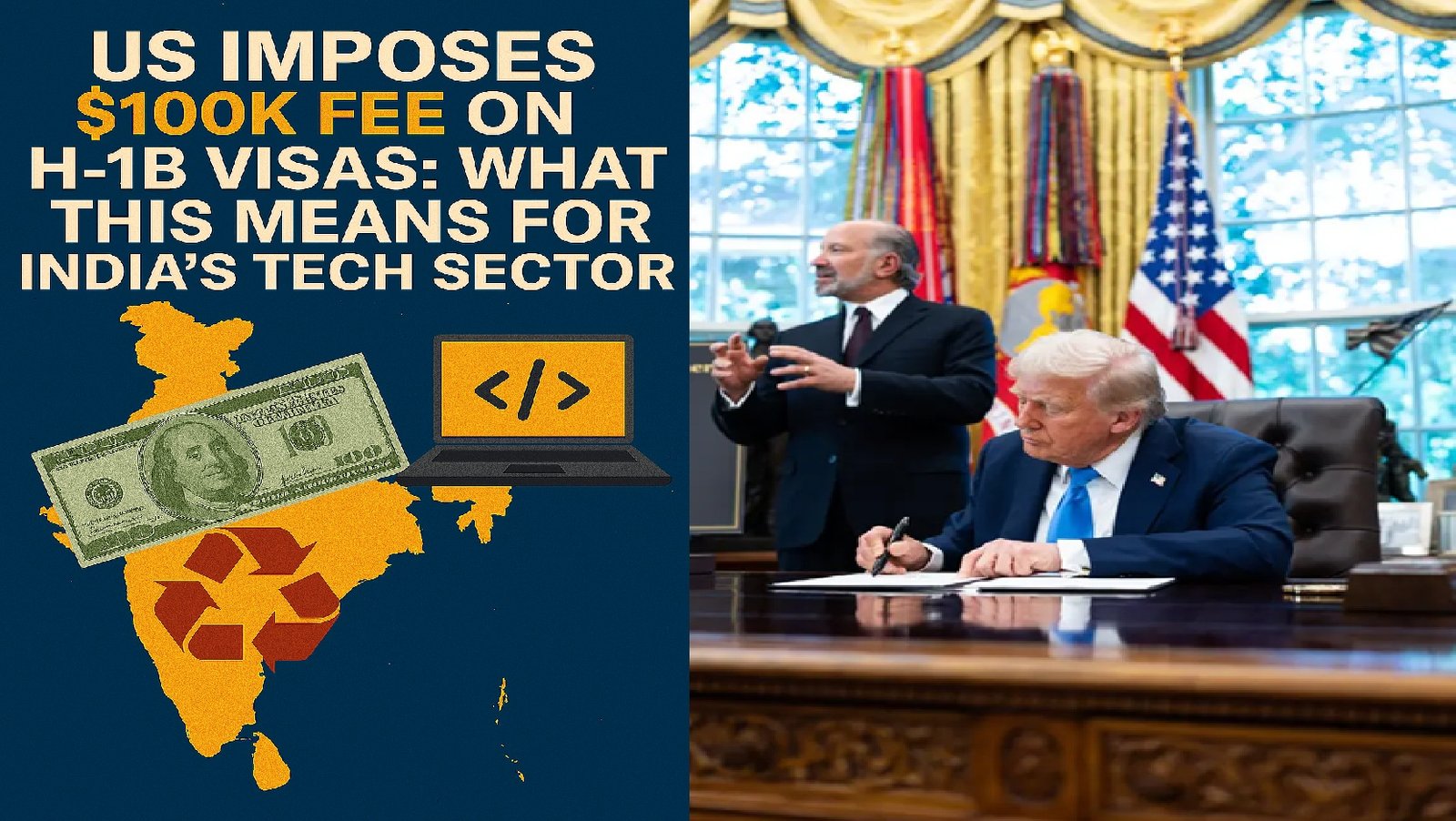
US Imposes $100K Fee on H-1B Visas: What This Means for India’s Tech Sector
US Imposes $100K Fee on H-1B Visas: What This Means for India’s Tech Sector
US Imposes $100K Fee on H-1B Visas: The US has announced a steep new $100,000 annual fee for H-1B visas, sparking concern from India’s IT industry over disruptions to projects, workforce deployment, and global operations. Explore potential impacts and responses.
New $100,000 H-1B Visa Fee Threatens Indian IT’s US Footprint
The U.S. government has unveiled a sweeping change to its high-skilled worker visa policy: a $100,000 annual fee for H-1B visa applications. Announced abruptly by the White House, the policy is already causing alarm within India’s technology services sector, which for decades has depended heavily on H-1B visas to deploy skilled talent to U.S.-based projects.
What’s Changed
Under the new rules, U.S. employers will be required to pay $100,000 per year per H-1B visa holder, including both new entrants and renewals. This is orders of magnitude higher than previous fees, which have ranged in the few thousands. Moreover, the policy comes with a one-day deadline for compliance, raising concerns about the feasibility of preparing and submitting applications in such a tight timeframe.
The announcement also coincides with other visa-reform measures, including the introduction of a “Gold Card” visa program for wealthy immigrants, signaling a broader shift in U.S. immigration and employment policy.
Why India’s IT Industry Is Concerned
India’s IT sector, represented by trade body Nasscom, has warned that the policy change will disrupt ongoing onshore U.S. projects and impose severe cost pressures. Many Indian firms send employees on H-1B visas to work in or with U.S. clients; these cost increases could alter the economics of such deployments.
Some specific concerns:
Operational disruption: Projects in progress may suffer delays if visa renewals or new applications are stalled by the fee or required pre-payments.
Uncertainty for professionals: With very short notice, many Indian visa holders abroad may struggle to return before the rules take effect, and some may face the inability to travel for work.
Cost burdens: Companies—especially smaller firms—may find the additional cost unsustainable, potentially reducing hiring or shifting work offshore.
Repercussions and Wider Effects: US Imposes $100K Fee on H-1B Visas:
The U.S. tech and business environment may see a decline in foreign talent mobility. Some tech giants like Amazon, Microsoft, and JPMorgan have reportedly advised visa holders to stay in the U.S. or quickly return before the new rules take effect.
There is concern that innovation, R&D, and high-value work might be relocated or kept out of the U.S. if talent finds it easier or cheaper to remain in countries like India.
For India, this could become a double-edged sword: while some job opportunities in the U.S. might shrink, there could be a boost of domestic capabilities — higher demand for remote work, onshore/offshore models, investments in skill development, and retention.
Challenges, Legal & Practical
Legal challenges could arise, since critics argue that such a large fee imposed via executive order may overstep legal bounds or exceed what Congress has authorized in fee setting.
The implementation logistics are unclear: how the fee will be administered, whether there will be exemptions, what counts as eligible or “rarefied skill sets,” etc.
Smaller companies and startups may lack the financial flexibility to absorb such large costs, potentially increasing consolidation in the tech services space.
What to Watch Next: US Imposes $100K Fee on H-1B Visas
Clarifications/exemptions: Whether certain sectors, roles, or existing visa holders may gain relief from the fee or transition periods.
Responses from Indian firms: How IT companies adapt strategies — more remote work, hiring locally in the U.S., shifting operations.
Legal pushback: Litigation or congressional action to block, delay, or modify the fee.
Market effects: Changes in talent migration flows; potentially increased domestic innovation in India; possible wage inflation in sectors that depend on H-1Bs.



Pingback: Trump Claims Credit for India-Pakistan Ceasefire, Demands Nobel Prize - DNN
Pingback: UK Output Slowdown, Rupee Volatility, and GST Impacts Raise Economic Concerns - DNN
Pingback: Jaishankar's Global Workforce Call Amid H-1B Visa Fee Surge: A Veiled Message to Trump - ANN
Pingback: Vedanta Unveils ₹13,226 Crore Investment, Eyes 3.1 MTPA Aluminum Capacity Post-Demerger - ANN
Pingback: Global Markets on Alert as Dollar Rises Ahead of U.S. CPI Data — Yen Slips to One-Week Low - DNN
Pingback: Sovereign Gold Bond 2018-19: 287% Returns! The Hidden Gold Rush of India - ANN