
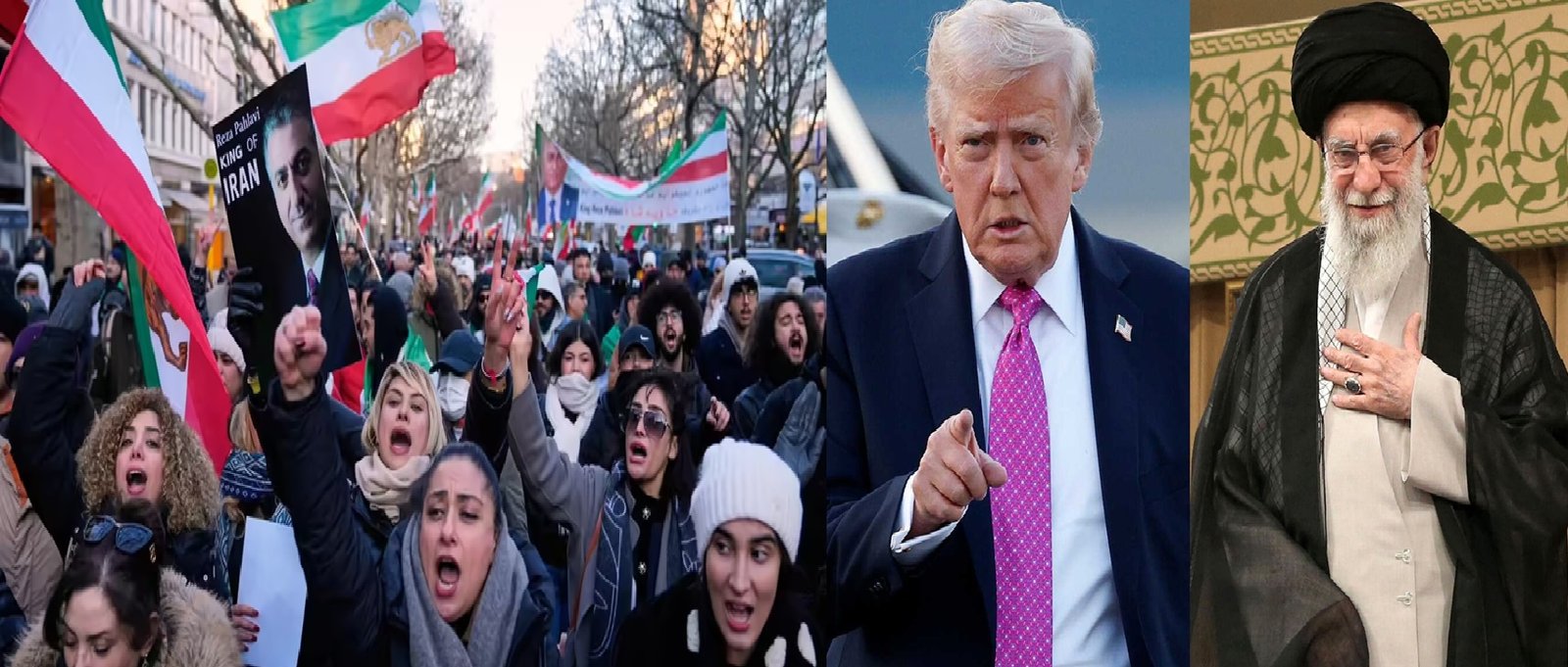
US–Iran Tensions Explode as Trump Warns of ‘Very Strong Action’ Amid Mass Protests
US–Iran Tensions Explode as Trump Warns of ‘Very Strong Action’ Amid Mass Protests
US–Iran tensions escalate after Donald Trump warns of “very strong action” as mass protests spread across Iran, raising fears of a wider Middle East crisis.
Amit Kaul – For Digital Desk, Bengaluru: January 13, 2026 – Tensions between the United States and Iran have reached a dangerous new peak after former US President Donald Trump issued a stern warning of “very strong action” against Tehran, as anti-government protests continue to spread across Iranian cities. The developments have sparked global concern, with fears growing over a potential military confrontation that could destabilize the Middle East and disrupt global energy markets.
https://digitalamitkaul.online/trump-tough-stance-iran-protest-crackdown-global-reaction/
US–Iran Tensions: Trump Issues Strong Warning on Iran
Speaking to reporters on Monday, Trump accused the Iranian leadership of violently suppressing dissent and destabilizing the region. He suggested that the United States is considering a wide range of responses, including economic, diplomatic, and military options, if the situation continues to deteriorate.
Trump also reiterated his long-standing criticism of nations that continue trade relations with Iran, warning that secondary sanctions could be imposed. According to US officials, Washington is reviewing a plan that would levy steep tariffs or penalties on countries found violating existing restrictions on Iran’s oil and financial sectors.
The remarks signal a significant hardening of Washington’s stance and have reignited debate over the future of US–Iran relations.
US–Iran Tensions: Protests Spread Across Iran
Iran has been gripped by widespread protests for weeks, with demonstrators voicing anger over economic hardship, political repression, and alleged human rights abuses. Reports from inside the country suggest that protests have erupted in major cities, including Tehran, Isfahan, Shiraz, and Mashhad.
Human rights organizations claim that hundreds of protesters have been killed and thousands detained by security forces. Iranian authorities, however, dispute these figures and insist that the situation is under control.
In an effort to curb mobilization, the Iranian government has imposed internet blackouts and restricted access to social media platforms. Despite these measures, videos and eyewitness accounts continue to surface online, fueling international outrage.
US–Iran Tensions: Global Reaction and Diplomatic Pressure
The escalating crisis has prompted reactions from governments and international bodies worldwide. European leaders have urged restraint, calling on both Washington and Tehran to avoid actions that could lead to open conflict.
The United Nations has expressed concern over reports of excessive force against protesters and called for an independent investigation. Meanwhile, Russia and China have criticized what they describe as “external interference” in Iran’s internal affairs, warning against unilateral military action.
Middle Eastern countries are closely monitoring the situation, given the potential spillover effects on regional security. Analysts warn that any escalation could impact shipping routes in the Strait of Hormuz, through which a significant portion of the world’s oil supply passes.
US–Iran Tensions: Impact on Oil Markets and Global Economy
Financial markets reacted nervously to the rising tensions. Oil prices climbed amid fears of supply disruptions, while global stock markets showed increased volatility.
Energy experts caution that even the perception of instability in the Gulf region can drive up fuel prices worldwide. For countries already grappling with inflation, a prolonged crisis could worsen economic pressures and impact consumers globally.
Businesses with exposure to the Middle East are also reassessing risks, as sanctions and geopolitical uncertainty threaten trade and investment flows.
A History of Strained Relations
US–Iran relations have been fraught for decades, marked by mutual distrust, sanctions, and periodic military confrontations. The withdrawal of the United States from the Iran nuclear deal during Trump’s previous term had already strained ties, and efforts to revive diplomatic engagement have repeatedly stalled.
Observers note that the current crisis represents one of the most serious flashpoints in recent years, particularly given the scale of internal unrest within Iran and the sharp rhetoric coming from Washington.
US–Iran Tensions: What Happens Next?
While no immediate military action has been announced, analysts warn that miscalculation on either side could rapidly escalate the situation. Diplomatic backchannels are reportedly active, but prospects for de-escalation remain uncertain.
https://aamnewsnetwork.com/trump-claims-nobel-prize-india-pakistan/
Much will depend on how Iran’s leadership responds to internal pressure and whether international mediation can prevent further deterioration. For now, the world is watching closely as one of the most volatile geopolitical standoffs of 2026 continues to unfold.
Author Bio
Amit Kaul is a professional content writer and digital news strategist based in Bengaluru (India). With over a decade of experience covering transportation, technology, and travel, Amit specializes in creating SEO-optimized, engaging news content for digital platforms. He focuses on in-depth reporting, trend analysis, and reader-friendly storytelling, ensuring articles reach a global audience effectively.


Pingback: Trump Rebukes Greenland PM, Rekindles Arctic Geopolitical Tensions - DNN
Pingback: Iran Protests Turn Deadliest as Death Toll Crosses 2,500, Global Alarm Grows - ANN
Pingback: Trump Drops Tariff Threat Over Greenland at Davos, Calming Global Market Jitters - DNN
Pingback: Drone Strikes Escalate Sudan Conflict, Deepening Humanitarian Crisis - DNN