
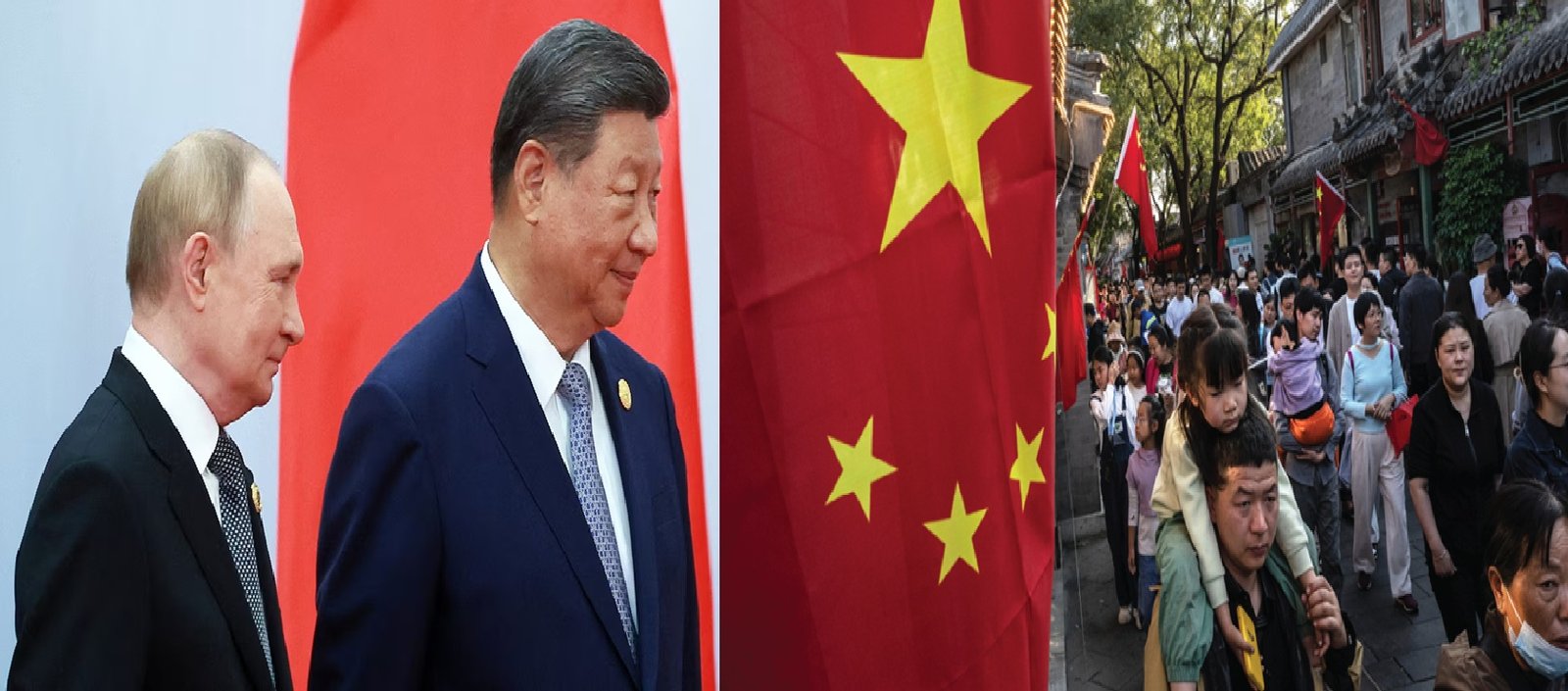
Russia’s Public Opinion Turns Toward China: 2025 Survey Reveals a Major Global Power Shift
Russia’s Public Opinion Turns Toward China: 2025 Survey Reveals a Major Global Power Shift
Russia’s Public Opinion Turns Toward China: A new 2025 Gallup survey shows a record surge in Russian approval for China’s leadership as ties between Moscow and Beijing deepen amid global polarization.
A groundbreaking Gallup poll released this week reveals that 69% of Russians now approve of China’s leadership, the highest figure in two decades. By contrast, approval for U.S. leadership has plummeted to just 14%, underscoring a dramatic realignment in global perception and alliance patterns.
The survey, conducted across 1,200 respondents in major Russian cities, reflects a growing sentiment of partnership between Moscow and Beijing, both politically and economically. Analysts say this marks a turning point in global power dynamics, signaling a consolidation of the “Eastern bloc” amid tensions with the West.
https://digitalamitkaul.online/global-markets-dollar-rises-us-cpi-yen-slips/
Rising Confidence in China’s Role
According to Gallup’s analysis, Russian confidence in China’s leadership has risen by 20 percentage points since 2022. This surge coincides with expanding trade ties, energy cooperation, and joint defense initiatives between the two nations.
China has become Russia’s largest trading partner, accounting for nearly 35% of its foreign trade. With Western sanctions still in place following the Ukraine conflict, Russia has leaned heavily on Chinese imports, technology, and investment to stabilize its economy.
“China is now viewed not just as an ally but as a lifeline,” says political analyst Elena Kurova from the Moscow School of International Affairs. “Public perception mirrors the leadership’s pivot toward Beijing.”
Decline of Western Influence in Russian Minds: Russia’s Public Opinion Turns Toward China
While approval for China has surged, attitudes toward the West have deteriorated sharply. The same Gallup survey found that only 14% of Russians view the United States favorably, compared to 52% in 2015. Approval of the European Union has also dropped below 20%.
The ongoing sanctions, cultural decoupling, and media portrayal of the West as “hostile” have significantly altered public sentiment. Russian state television frequently highlights China’s “respectful diplomacy” in contrast to Western “arrogance,” further shaping domestic perception.
This divide is also generational — younger Russians (aged 18–30) show slightly higher favorability toward Western pop culture and technology, but still align politically with the government’s “Look East” strategy.
A Strategic and Ideological Partnership
Experts note that the growing Russia–China alignment extends far beyond economics. The two countries have increased joint military exercises, launched cross-border infrastructure projects, and coordinated stances at the United Nations Security Council on issues like Ukraine, Taiwan, and Middle East conflicts.
Chinese President Xi Jinping and Russian President Vladimir Putin have met four times this year alone, reinforcing what Xi has called a “partnership without limits.”
In addition, Russia has allowed greater Chinese access to its Arctic routes, while China has boosted purchases of discounted Russian oil and gas. These interdependencies are shaping what political theorists now refer to as “The Eurasian Order.”
Implications for the Global Balance of Power: Russia’s Public Opinion Turns Toward China
The surge in Russian approval for China could have far-reaching consequences. For Western policymakers, this trend confirms fears of a long-term geopolitical realignment that weakens the influence of U.S.-led institutions like NATO and the G7.
Meanwhile, India — another major Asian power — finds itself navigating a delicate balance. As a member of the Quad and the BRICS bloc, New Delhi must manage relations with both Washington and Moscow without alienating Beijing.
Dr. Rajiv Bhatia, former Indian ambassador to Russia, commented:
“This alignment reinforces the need for India to enhance strategic autonomy. The growing Russia–China axis alters the dynamics of Eurasian politics and global trade flows.”
https://aamnewsnetwork.com/afghanistan-pakistan-ceasefire-qatar-turkey/
Public Sentiment and Media Reaction: Russia’s Public Opinion Turns Toward China
Social media in Russia is flooded with pro-China posts, memes, and news coverage celebrating joint initiatives. Chinese-language courses and cultural exchanges have seen record enrollments in Moscow and St. Petersburg.
Independent Russian commentators, however, warn of potential overreliance on Beijing. “Russia risks becoming the junior partner in this relationship,” says economist Anton Lebedev. “Strategic dependence is rising faster than the public realizes.”
Conclusion: The Dawn of a New Era
The 2025 Gallup findings underscore a fundamental shift in Russia’s worldview, one that may redefine global alliances for decades. With public opinion now strongly favoring China, Moscow’s Eastward orientation appears irreversible — signaling the possible end of Western dominance in Eurasia and the rise of a multipolar world order.